
Kosher Salt for cleaning is a sodium chloride compound characterized by its larger, flake-like crystals, which make it highly effective for various household cleaning tasks. The coarse texture of kosher salt provides a gentle abrasive quality, ideal for scrubbing surfaces without causing damage. This form of salt is free of iodine and anti-caking agents, often found in table salt, which can leave residues. In cleaning applications, kosher salt is particularly valued for its ability to dissolve slowly, offering sustained contact with surfaces for more thorough cleaning action.
Related ingredients: the natural cleaning guides, salt, and washing soda.
Kosher salt’s hygroscopic nature enables it to absorb water stains and fresh spills effectively from fabrics and carpets. The salt’s granules can also be used to scour and polish cookware, helping to remove burnt-on food particles while being gentle on the material. Its deodorizing properties make it useful for neutralizing odors in refrigerators and on cutting boards. The versatility of kosher salt extends to garden use, where it can safely eliminate weeds without the harsh effects of chemical herbicides. Combining kosher salt with other natural ingredients like lemon or vinegar enhances its cleaning efficacy, creating solutions suitable for a wide range of domestic chores.
Kosher salt isn’t just for cooking-it’s a powerful, natural cleaning agent that deserves a place in your cleaning arsenal. This comprehensive guide explores how this kitchen staple can tackle tough cleaning challenges throughout your home.
What Is Kosher Salt?
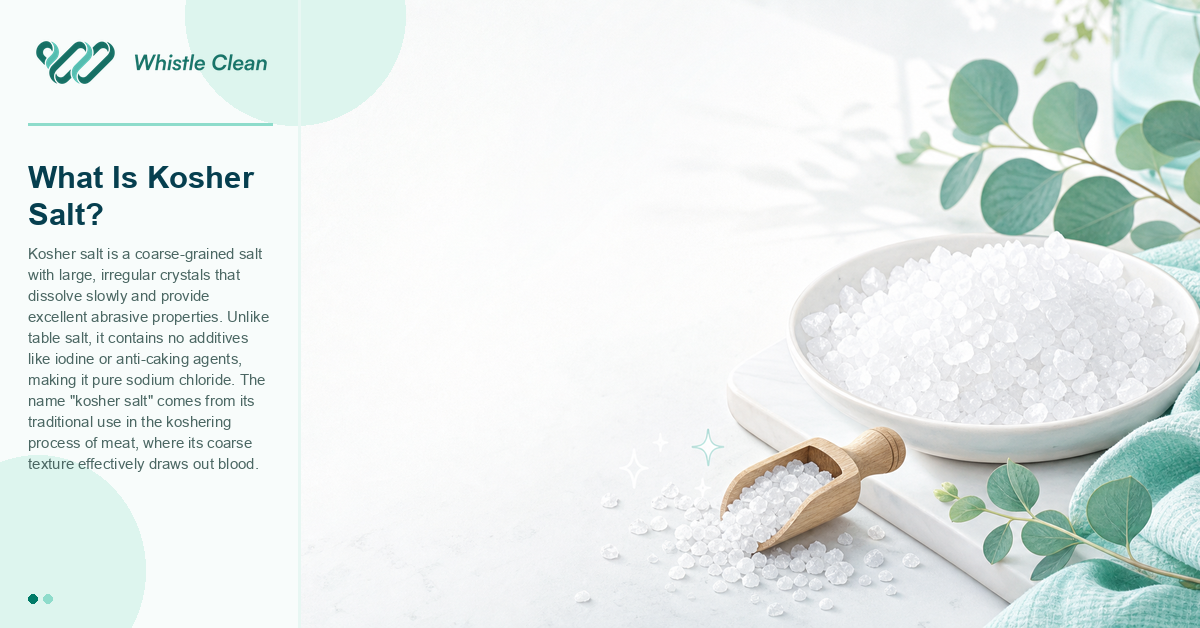
Kosher salt is a coarse-grained salt with large, irregular crystals that dissolve slowly and provide excellent abrasive properties. Unlike table salt, it contains no additives like iodine or anti-caking agents, making it pure sodium chloride. The name "kosher salt" comes from its traditional use in the koshering process of meat, where its coarse texture effectively draws out blood.
Where does Kosher Salt come from?
Kosher salt is harvested from either underground salt deposits (rock salt) or evaporated seawater. Major brands like Morton and Diamond Crystal source their salt from ancient sea beds and salt mines. The salt undergoes minimal processing-it’s simply mined or evaporated, then raked or compressed to create its distinctive flaky or coarse texture without the fine grinding that produces table salt.
What does Kosher Salt look like and how is Kosher Salt generally used?
Kosher salt features large, flat, or pyramid-shaped crystals that are easy to pinch and sprinkle. The crystals are typically 2-3 times larger than table salt grains, with an irregular, flaky appearance. In cooking, it’s prized for seasoning because the large crystals provide better control and don’t dissolve immediately. For cleaning purposes, this coarse texture acts as a gentle abrasive that scrubs surfaces without scratching, while the salt’s chemical properties help dissolve grease, absorb odors, and lift stains.
Other Names for Kosher Salt
What are Kosher Salts other names or chemical terms?
Kosher salt is sometimes called "koshering salt," "rock salt" (though true rock salt is different), or "coarse salt." Chemically, it’s sodium chloride (NaCl), the same compound as table salt. You might also see it labeled as "flake salt" or "kashering salt." In scientific contexts, it’s simply referred to as sodium chloride crystals without additives.
Are there different grades, forms, or strengths of Kosher Salt?
While kosher salt is generally consistent, different brands have varying crystal sizes and shapes. Diamond Crystal has lighter, flakier crystals, while Morton’s kosher salt features denser, more uniform grains. Both are equally effective for cleaning, though the coarser the grain, the more abrasive action it provides. There’s no "strength" variation-it’s all pure sodium chloride-but crystal size affects how quickly it dissolves and how much scrubbing power it delivers.
Cleaning Uses
How is Kosher Salt used in home cleaning?
Kosher salt serves multiple cleaning functions: as a gentle abrasive scrub, an odor absorber, a stain lifter, and a grease cutter. You can use it dry as a scouring powder, mixed with water to form a paste, or combined with other natural cleaners like lemon juice or vinegar. The coarse crystals physically scrub away grime while the salt’s hygroscopic nature (ability to attract water) helps break down sticky residues and absorb moisture from stains.
What are the best surfaces or areas to clean with Kosher Salt?
Kosher salt excels at cleaning:
- Cast iron cookware – Removes stuck-on food without damaging seasoning
- Cutting boards – Scrubs and deodorizes wooden and plastic boards
- Stainless steel sinks – Polishes and removes water spots
- Coffee and tea stains – Lifts discoloration from mugs and carafes
- Oven spills – Absorbs fresh grease splatters
- Drain maintenance – Helps clear minor clogs and eliminate odors
- Refrigerator interiors – Absorbs odors and scrubs spills
- Copper and brass – Restores shine when mixed with acid
- Wine stains – Draws out fresh spills from fabrics and carpets
- Grout lines – Scrubs away dirt without harsh chemicals
Can Kosher Salt be mixed safely with other cleaning ingredients?
Yes! Kosher salt combines safely with many natural cleaning ingredients:
- Lemon juice – Creates an acidic scrub perfect for copper, brass, and stain removal
- Vinegar – Enhances cleaning power for drains, surfaces, and deodorizing (though the reaction is mild)
- Baking soda – Doubles the abrasive power for tough scrubbing jobs
- Dish soap – Makes a gentle paste for everyday cleaning
- Hydrogen peroxide – Safe combination for stain treatment
- Essential oils – Adds pleasant scent to salt-based cleaners
Never mix kosher salt with: Bleach-based products (can create toxic reactions when combined with other acidic cleaners in sequence) or ammonia-based cleaners.
Safety and Storage
What should you do or avoid when using Kosher Salt?
Do:
- Test on inconspicuous areas first
- Use gentle pressure when scrubbing
- Rinse thoroughly after cleaning
- Wear gloves if you have sensitive skin or cuts
- Use fresh salt for best results
Avoid:
- Excessive scrubbing on soft materials
- Using on sealed or waxed surfaces
- Applying to wet electronics
- Mixing with incompatible chemicals
- Using on already damaged surfaces
Which cleaning mixtures or surfaces are unsafe?
Unsafe for these surfaces:
- Marble, granite, and natural stone – Salt’s abrasiveness and acidity (when mixed with lemon/vinegar) can etch and dull surfaces
- Waxed or sealed wood – Can scratch protective coatings
- Lacquered furniture – May damage finish
- Gold or silver-plated items – Too abrasive for thin plating
- Non-stick cookware – Can scratch protective coating
- Aluminum – May cause pitting when combined with acidic ingredients
Unsafe mixtures:
- Salt with bleach followed by acidic cleaners (can produce chlorine gas)
- Salt with commercial drain cleaners containing lye (creates excessive heat)
How should Kosher Salt be stored for freshness and safety?
Store kosher salt in an airtight container in a cool, dry place away from moisture. Unlike table salt, kosher salt contains no anti-caking agents, so it can clump if exposed to humidity. Keep your cleaning salt separate from cooking salt to avoid contamination. A sealed glass jar, plastic container with tight-fitting lid, or the original box placed inside a plastic bag works well. Properly stored, kosher salt lasts indefinitely-it doesn’t expire or lose effectiveness.
Why Kosher Salt Works
Why does Kosher Salt clean so well?
Kosher salt’s cleaning power comes from three key properties: physical abrasion, chemical action, and absorption. The large, irregular crystals provide gentle scrubbing action that physically dislodges dirt and grime without scratching most surfaces. Chemically, salt is mildly antiseptic and helps break down proteins and fats. Its hygroscopic nature means it attracts and absorbs moisture, pulling stains and odors from surfaces. When dissolved, salt increases water’s density and alters its surface tension, helping it penetrate and lift away stubborn residues.
What chemical reaction or property makes Kosher Salt effective?
Sodium chloride’s ionic structure is the key to its cleaning power. When salt dissolves, it separates into sodium (Na+) and chloride (Cl-) ions. These ions interact with grease and protein molecules, breaking them down through a process called salting out. The chloride ions are particularly effective at disrupting the bonds in organic materials. Salt also creates an osmotic effect, drawing moisture out of bacterial cells and odor-causing compounds. When combined with acids like lemon juice or vinegar, salt enhances the acid’s ability to dissolve mineral deposits and tarnish through increased ionic activity.
DIY Cleaning Recipes
What easy homemade cleaner recipes use Kosher Salt?
All-Purpose Scrub Paste:
- 1/2 cup kosher salt
- 1/4 cup baking soda
- 1/4 cup liquid dish soap
Mix into paste; use on sinks, tubs, and stovetops.
Cast Iron Cleaner:
- 2 tablespoons kosher salt
- 1 tablespoon cooking oil
Scrub with paper towel, rinse, and dry immediately.
Drain Freshener:
- 1/2 cup kosher salt
- 1/2 cup baking soda
- 1 cup white vinegar
- 2 cups boiling water
Pour salt and baking soda down drain, follow with vinegar, wait 15 minutes, flush with boiling water.
Copper and Brass Polish:
- 1/4 cup kosher salt
- 1/4 cup flour
- White vinegar to make paste
Apply, let sit 15 minutes, scrub, and rinse.
Cutting Board Deodorizer:
- 2 tablespoons kosher salt
- 1/2 lemon
Sprinkle salt on board, scrub with lemon half, rinse.
What are the best ingredient combinations for Kosher Salt?
For grease cutting: Salt + dish soap + warm water
For stain removal: Salt + lemon juice or hydrogen peroxide
For abrasive power: Salt + baking soda
For deodorizing: Salt + vinegar
For polishing metal: Salt + flour + vinegar
For drain cleaning: Salt + baking soda + vinegar + hot water
For fabric stains: Salt + cold water (immediate application)
For rust removal: Salt + lime juice
Troubleshooting
What common problems can occur when cleaning with Kosher Salt?
Problem: Scratching on surfaces
Cause: Crystals too coarse or excessive pressure applied
Problem: White residue left behind
Cause: Insufficient rinsing or using too much salt
Problem: No visible cleaning effect
Cause: Salt dissolved too quickly or surface needs stronger cleaner
Problem: Discoloration on metal
Cause: Salt left on surface too long, creating corrosion
Problem: Clumping during use
Cause: Salt absorbed moisture from air or wet hands
How can these issues be prevented or solved?
Prevent scratching: Test first, use light pressure, dampen salt slightly, or choose finer grain salt for delicate surfaces.
Remove residue: Rinse thoroughly with warm water, wipe with damp cloth multiple times, or use a spray bottle for even rinsing.
Improve effectiveness: Use salt as paste rather than dissolved solution, combine with complementary cleaners (lemon, vinegar), or allow salt to sit on stain before scrubbing.
Avoid metal discoloration: Never leave salt on metal surfaces for extended periods, rinse immediately after cleaning, and dry thoroughly.
Prevent clumping: Store properly in airtight container, use dry measuring spoon, or break up clumps before use.
Environmental and Health Considerations
Is Kosher Salt safe for health and the environment?
Yes, kosher salt is exceptionally safe for both health and environment. It’s a natural mineral with no synthetic chemicals, making it non-toxic to humans, pets, and aquatic life. Unlike commercial cleaners containing phosphates, chlorine, or synthetic fragrances, salt breaks down completely and doesn’t accumulate in the environment. It’s biodegradable and won’t contribute to water pollution when rinsed down drains.
For personal health, kosher salt is gentle and non-irritating for most people, though those with cuts or sensitive skin may experience mild stinging. It produces no harmful fumes, making it ideal for people with respiratory sensitivities or chemical allergies. Salt is also food-safe, so there’s no concern about residue on surfaces that contact food.
The environmental footprint of salt production is minimal compared to chemical cleaner manufacturing. However, use salt-based cleaners judiciously-excessive salt in soil can harm plants, so avoid dumping large quantities in gardens or near vegetation.
Kosher Salt FAQs
Can Kosher Salt be mixed with vinegar or hydrogen peroxide?
Vinegar: Yes, this is a safe and effective combination. Salt and vinegar create a powerful cleaning solution for drains, surfaces, and stain removal. The acetic acid in vinegar enhances salt’s cleaning properties. Mix them directly together or use sequentially. The mild fizzing reaction is harmless.
Hydrogen peroxide: Yes, salt and hydrogen peroxide combine safely for stain treatment and mild disinfection. This combination works particularly well on organic stains like blood or wine. Mix 2 tablespoons salt with 1/2 cup hydrogen peroxide for a paste that can sit on stains for 15-30 minutes before rinsing.
Important: Never combine salt-and-vinegar or salt-and-peroxide mixtures with bleach, as this can create dangerous chlorine gas.
Is Kosher Salt safe for marble, stone, or wood surfaces?
Marble and natural stone: No, avoid using kosher salt on marble, granite, limestone, or travertine. The abrasive crystals can scratch polished surfaces, and when combined with acidic ingredients (lemon, vinegar), it can etch and dull the stone permanently. Salt can also penetrate porous stone and cause discoloration.
Sealed stone: Use extreme caution. While sealed stone has some protection, aggressive scrubbing with salt can wear down sealant over time.
Wood surfaces: Depends on the finish. Unfinished or oiled wood (like cutting boards) tolerates salt well-in fact, salt is excellent for cleaning wooden cutting boards. However, avoid using salt on waxed, varnished, or lacquered wood as it can scratch the protective coating. Always scrub gently and rinse quickly to prevent moisture damage.
Does Kosher Salt clean, disinfect, or both?
Kosher salt primarily cleans rather than disinfects. It excels at physically removing dirt, grime, stains, and odors through abrasion and absorption, but it’s not a true disinfectant that kills bacteria and viruses to EPA standards.
That said, salt does have mild antimicrobial properties. Its ability to draw moisture from bacterial cells through osmosis can inhibit bacterial growth and reduce microbial populations, which is why salt has been used as a preservative for centuries. However, this effect isn’t strong or fast enough to qualify salt as a disinfectant for cleaning purposes.
For cleaning needs: Salt is excellent and sufficient.
For disinfection needs: Combine salt with actual disinfectants like hydrogen peroxide, or use salt for cleaning followed by a proper disinfectant like diluted bleach, rubbing alcohol, or commercial disinfectant.
The combination of salt’s cleaning power with a true disinfectant provides both spotless surfaces and germ elimination-the best of both worlds for a truly clean home.
Kosher salt proves that effective cleaning doesn’t require harsh chemicals or expensive products. This humble kitchen staple offers powerful, eco-friendly cleaning for dozens of household tasks. By understanding how to use it properly and safely, you can tackle tough cleaning challenges while protecting your health, your home, and the environment.