
Salt for cleaning is an effective, non-toxic agent used in various domestic and industrial applications to enhance hygiene and cleanliness. Composed primarily of sodium chloride, this mineral excels in its ability to act as an abrasive, a deodorizer, and an antiseptic. Salt’s hygroscopic nature enables it to absorb water molecules from its environment, making it highly effective in stain removal and moisture control. Its granular texture assists in scrubbing actions, effectively dislodging dirt and residues from surfaces.
Related ingredients: the natural cleaning guide collection, kosher salt, and washing soda.
In homes, salt is frequently mixed with vinegar or lemon juice to create potent cleaning pastes for tackling tough stains and mineral deposits. Industrially, it is used in larger-scale cleaning operations, such as in the restoration of metals and in water softening processes. Salt’s antibacterial properties also make it a preferred choice for preserving food and cleaning kitchen surfaces, ensuring both safety and cleanliness. The affordability and availability of salt further contribute to its widespread use as a cleaning commodity.
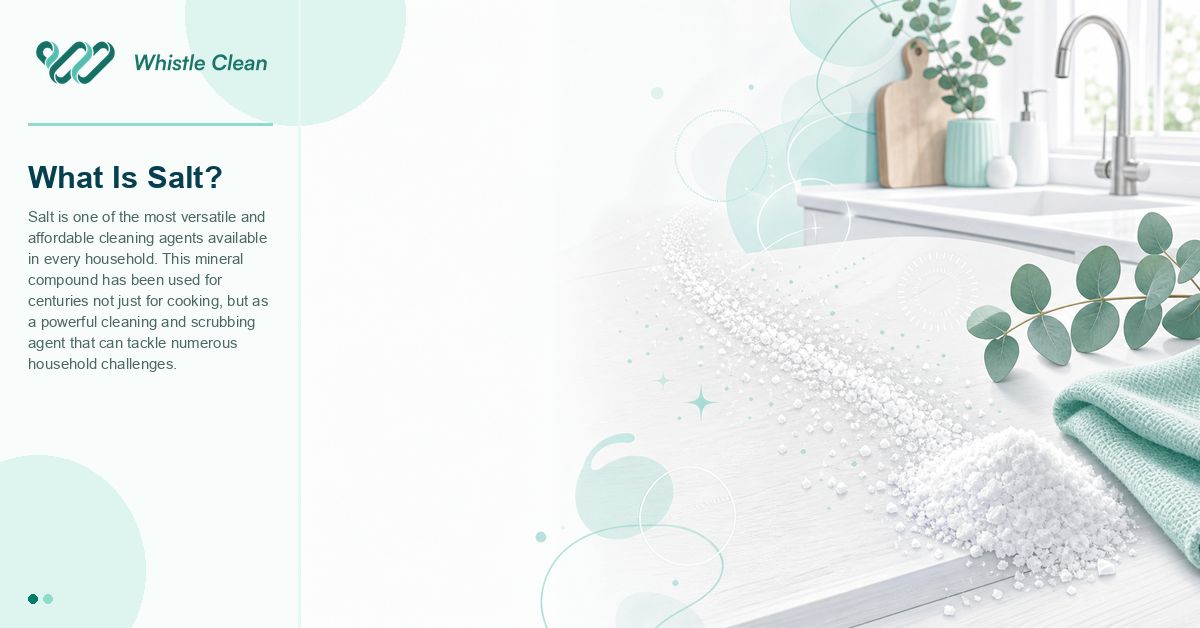
What Is Salt?
Salt is one of the most versatile and affordable cleaning agents available in every household. This mineral compound has been used for centuries not just for cooking, but as a powerful cleaning and scrubbing agent that can tackle numerous household challenges.
Where does Salt come from?
Salt is harvested through two primary methods: mining from underground salt deposits (rock salt) and evaporation from seawater or saltwater lakes (sea salt). The salt you use for cleaning is the same sodium chloride found in your kitchen, extracted from ancient ocean beds that dried up millions of years ago or from modern saltwater sources. Major salt deposits exist worldwide, with significant production in the United States, China, India, and Germany.
What does Salt look like and how is Salt generally used?
Salt appears as white or translucent crystals ranging from fine powder to coarse granules. Table salt features fine, uniform grains, while kosher salt has larger, flakier crystals, and sea salt varies in texture and color depending on its source.
For cleaning purposes, salt is typically used as:
- An abrasive scrubbing agent for tough stains
- A deodorizing powder for absorbing odors
- A stain treatment when combined with other ingredients
- A rust removal agent
- A drain cleaner when mixed with hot water
Other Names for Salt
What are Salts other names or chemical terms?
Salt goes by several names depending on context:
- Sodium chloride (chemical name)
- NaCl (chemical formula)
- Table salt (refined for consumption)
- Sea salt (harvested from seawater)
- Rock salt (mined from deposits)
- Halite (mineralogical term)
- Common salt (general term)
Are there different grades, forms, or strengths of Salt?
Yes, salt comes in various forms suitable for different cleaning applications:
Table Salt: Fine-grained and highly refined; best for gentle scrubbing and mixing into liquid solutions.
Kosher Salt: Larger, flakier crystals without additives; excellent for scrubbing and absorbing moisture.
Sea Salt: Available in various grain sizes; contains trace minerals that don’t affect cleaning properties.
Rock Salt: Coarse, large crystals; ideal for heavy-duty applications like ice melting and drain cleaning.
Epsom Salt: Technically magnesium sulfate, not sodium chloride; used for different cleaning purposes.
For most household cleaning, inexpensive table salt or kosher salt works perfectly well. Avoid iodized salt for cleaning metal surfaces, as iodine can cause discoloration.
Cleaning Uses
How is Salt used in home cleaning?
Salt serves multiple cleaning functions throughout your home:
As an Abrasive Scrubber: The crystalline structure makes salt an effective gentle abrasive for removing stuck-on food, stains, and grime without scratching most surfaces.
As an Absorbent: Salt quickly absorbs liquids, making it ideal for treating fresh spills, especially wine, grease, and other staining substances.
As a Deodorizer: Salt neutralizes odors in cutting boards, garbage disposals, refrigerators, and shoes.
As a Stain Remover: When combined with acids like lemon juice or vinegar, salt creates powerful stain-fighting pastes.
As a Rust Remover: Salt’s abrasive properties combined with acidic ingredients help remove rust from metal surfaces.
What are the best surfaces or areas to clean with Salt?
Salt works exceptionally well on:
Kitchen Surfaces:
- Cast iron cookware (for scrubbing without removing seasoning)
- Copper and brass items (restores shine)
- Cutting boards (deodorizes and sanitizes)
- Coffee and tea stains in mugs
- Oven spills (while still warm)
- Grease splatter on stovetops
Bathroom Areas:
- Soap scum on tubs and tiles
- Hard water stains
- Toilet bowls (as a gentle abrasive)
- Mildew on grout
Fabric and Carpets:
- Fresh wine, blood, or grease stains
- Sweat stains on clothing
- Color bleeding prevention during washing
Other Applications:
- Drain maintenance and odor control
- Refrigerator spills and odors
- Vases with mineral deposits
- Wicker furniture (prevents yellowing)
Can Salt be mixed safely with other cleaning ingredients?
Yes, salt combines safely with many common household cleaners to enhance effectiveness:
Salt + Lemon Juice: Creates a powerful paste for copper, brass, and rust stains. The citric acid reacts with salt to break down oxidation.
Salt + Vinegar: Forms an effective solution for dissolving mineral deposits, soap scum, and mildew. The acetic acid and abrasive salt work synergistically.
Salt + Baking Soda: Produces a gentle yet effective scrubbing powder for tubs, sinks, and tile. Both are mild abrasives that won’t scratch.
Salt + Dish Soap: Makes an excellent everyday scrubbing paste for cookware and surfaces.
Salt + Hot Water: Simple but effective for drain maintenance and dissolving grease.
Salt + Cream of Tartar: Creates a powerful paste for removing rust and stubborn stains from porcelain and enamel.
Safety and Storage
What should you do or avoid when using Salt?
DO:
- Test on inconspicuous areas first, especially on delicate surfaces
- Use salt as a gentle abrasive on durable surfaces
- Rinse thoroughly after cleaning to prevent residue
- Wear gloves if you have sensitive skin or open cuts (salt can sting)
- Use coarse salt for heavy scrubbing, fine salt for delicate tasks
- Apply salt immediately to fresh spills for best absorption
AVOID:
- Using salt on highly polished or sealed surfaces where scratching is a concern
- Applying salt to open wounds (it will cause stinging)
- Mixing salt with bleach and vinegar simultaneously (creates toxic fumes)
- Using excessive salt on plants or in drains connected to septic systems
- Leaving salt on metal surfaces for extended periods (can promote corrosion)
- Using salt on electronics or electrical components
Which cleaning mixtures or surfaces are unsafe?
Unsafe Mixtures:
Salt + Bleach + Vinegar: Never combine all three. While salt with vinegar is safe, and bleach alone is fine, adding vinegar to bleach creates toxic chlorine gas. Salt can accelerate this dangerous reaction.
Salt + Ammonia + Bleach: Creates toxic chloramine vapors that can cause respiratory damage.
Unsafe Surfaces:
Marble and Granite: Salt’s abrasive nature can scratch polished stone surfaces and dull their finish. Acidic salt mixtures (with lemon or vinegar) can etch marble permanently.
Hardwood Floors: Salt can scratch the finish and draw moisture from wood, causing damage. Salt solutions can leave white residue and dull the finish.
Stainless Steel (prolonged contact): While brief salt scrubbing is generally safe, leaving salt on stainless steel for extended periods can cause pitting and corrosion, especially in humid environments.
Waxed Surfaces: Salt can break down wax finishes on furniture and floors.
Aluminum: Salt can cause discoloration and pitting on aluminum surfaces, especially when combined with acidic ingredients.
Silk and Delicate Fabrics: Salt can damage fibers and set certain stains permanently.
How should Salt be stored for freshness and safety?
Proper storage ensures salt remains effective for cleaning:
Storage Conditions:
- Keep in an airtight container to prevent moisture absorption and clumping
- Store in a cool, dry place away from humidity
- Avoid storing near the stove or in damp cabinets under sinks
- Keep away from direct sunlight (though salt doesn’t degrade, containers may)
Container Recommendations:
- Glass jars with tight-fitting lids
- Plastic containers with secure seals
- Original packaging with a clip or rubber band
- Separate containers for cleaning salt versus food-grade salt to avoid confusion
Shelf Life:
Salt doesn’t expire and maintains cleaning effectiveness indefinitely when stored properly. However, anti-caking agents in table salt may lose effectiveness over time, causing clumping (which doesn’t affect cleaning power).
Safety Considerations:
- Label containers clearly, especially if storing in non-original packaging
- Keep out of reach of children and pets (ingesting large amounts is harmful)
- Store cleaning salt separately from food-preparation salt to prevent cross-contamination
- If salt becomes clumped, break up chunks or add a few grains of rice to absorb moisture
Why Salt Works
Why does Salt clean so well?
Salt’s cleaning effectiveness comes from multiple physical and chemical properties working together:
Abrasive Action: Salt crystals have a hard, angular structure that mechanically scrubs away dirt, grime, and stains without scratching most durable surfaces. Unlike harsh commercial abrasives, salt dissolves during use, reducing the risk of damage.
Hygroscopic Properties: Salt naturally attracts and absorbs water molecules from its environment. This makes it excellent for drawing out moisture from fresh spills, absorbing odors, and dehydrating bacteria.
Ionic Nature: As salt dissolves, it separates into sodium (Na+) and chloride (Cl-) ions. These charged particles interact with dirt molecules and grease, helping to break them apart and lift them from surfaces.
Osmotic Pressure: Salt creates an environment where water moves from areas of low salt concentration to high concentration. This osmotic action helps draw stains out of fabrics and surfaces while dehydrating microorganisms.
What chemical reaction or property makes Salt effective?
Several chemical mechanisms make salt a powerful cleaner:
Saponification Enhancement: When combined with oils and fats, salt helps accelerate the breakdown of grease molecules, making them easier to wash away. This is why salt helps clean greasy dishes and stovetops.
pH Modification: While salt itself is pH neutral, it can enhance the effectiveness of acidic cleaners like vinegar or lemon juice by increasing their ionic strength, making them better at breaking down mineral deposits and alkaline stains.
Oxidation Reactions: When salt combines with acidic ingredients (like lemon juice or vinegar) and comes in contact with tarnished metals, it facilitates oxidation-reduction reactions that remove tarnish from copper, brass, and bronze.
Corrosion of Rust: The chloride ions in salt accelerate the breakdown of iron oxide (rust) when combined with acids, making rust removal faster and more effective.
Antimicrobial Properties: At high concentrations, salt creates an inhospitable environment for many bacteria and molds by drawing water out of their cells through osmosis, effectively dehydrating and killing them.
Crystallization: As salt solutions dry, they crystallize and expand, which helps lift dirt and stains from porous surfaces like grout and unglazed tile.
DIY Cleaning Recipes
What easy homemade cleaner recipes use Salt?
All-Purpose Scrubbing Paste
- 1/2 cup salt
- 1/2 cup baking soda
- 1/4 cup liquid dish soap
- Mix into a paste; use on sinks, tubs, and tile
Copper and Brass Polish
- 1 tablespoon salt
- 1 tablespoon flour
- Enough vinegar to make a paste
- Apply, let sit 15 minutes, scrub, and rinse
Drain Cleaner and Deodorizer
- 1/2 cup salt
- 1/2 cup baking soda
- 1 cup vinegar
- 2 cups boiling water
- Pour dry ingredients down drain, add vinegar, wait 15 minutes, flush with boiling water
Cutting Board Sanitizer
- 2 tablespoons coarse salt
- 1/2 lemon
- Sprinkle salt on board, scrub with lemon half, let sit 5 minutes, rinse
Grout Cleaner
- 3 parts baking soda
- 1 part salt
- Enough water to make a paste
- Apply to grout, scrub with old toothbrush, rinse
Rust Remover
- 2 tablespoons salt
- 1 tablespoon lemon juice
- Mix into paste, apply to rust, let sit 2-3 hours, scrub with aluminum foil, rinse
Oven Spill Treatment
- Sprinkle salt generously on spill while oven is still warm
- Let sit until oven cools
- Wipe away with damp cloth
Carpet Stain Remover
- 1/4 cup salt
- 1/4 cup borax
- 1/4 cup vinegar
- Mix into paste, apply to stain, let dry completely, vacuum
What are the best ingredient combinations for Salt?
For Tough Stains and Tarnish:
Salt + Lemon Juice + Vinegar creates a triple-action cleaner that combines abrasive, acidic, and oxidizing properties. Ideal for copper, brass, and stubborn mineral deposits.
For Gentle Daily Cleaning:
Salt + Dish Soap provides effective cleaning power without harsh chemicals. The soap lifts grease while salt scrubs it away.
For Deodorizing and Sanitizing:
Salt + Baking Soda neutralizes odors from multiple angles-salt through dehydration and absorption, baking soda through pH neutralization.
For Heavy-Duty Scrubbing:
Salt + Cream of Tartar + Hydrogen Peroxide creates a powerful paste for removing rust, hard water stains, and discoloration from porcelain and enamel.
For Drain Maintenance:
Salt + Baking Soda + Boiling Water provides regular maintenance that prevents buildup without harsh chemicals.
For Fabric Stains:
Salt + Cold Water creates a soaking solution that prevents stains from setting, particularly effective on blood, wine, and protein-based stains.
Troubleshooting
What common problems can occur when cleaning with Salt?
Problem 1: White Residue After Cleaning
Salt can leave a white, chalky film on surfaces if not rinsed thoroughly or if too much is used.
Prevention:
- Use less salt in your cleaning mixture
- Rinse multiple times with clean water
- Wipe surfaces with a damp cloth after initial rinse
- Use distilled water for final rinse on surfaces prone to water spots
Solution:
- Wipe residue with a cloth dampened with white vinegar
- Follow with a clean water rinse
- Buff dry with a microfiber cloth
Problem 2: Scratching or Dulling of Surfaces
Despite being a “gentle” abrasive, salt can scratch soft or highly polished surfaces.
Prevention:
- Always test on an inconspicuous area first
- Use fine table salt instead of coarse salt on delicate surfaces
- Mix salt into a paste rather than using dry crystals
- Apply gentle pressure when scrubbing
- Avoid salt on marble, granite, hardwood, or highly polished surfaces
Solution:
- For minor scratches on stainless steel, buff with a specialized stainless steel polish
- For dulled finishes, re-polish with appropriate products for that surface type
- On wood, minor dulling may require re-waxing or re-oiling
Problem 3: Corrosion or Discoloration on Metal
Leaving salt on metal surfaces too long can cause pitting, rust, or discoloration.
Prevention:
- Never leave salt on metal surfaces for more than 30 minutes
- Rinse thoroughly and dry immediately after cleaning
- Avoid using salt on aluminum
- Don’t use salt water in metal containers for extended periods
- Apply a thin coat of oil to cast iron after salt cleaning
Solution:
- For minor corrosion, create a paste of baking soda and water, gently scrub, rinse, and dry
- For stainless steel discoloration, use a specialized stainless steel cleaner
- For cast iron, re-season according to manufacturer instructions
Problem 4: Stains Setting Permanently in Fabric
Using hot water with salt on protein-based stains can actually set the stain permanently.
Prevention:
- Always use cold water with salt for blood, egg, and dairy stains
- Apply salt immediately to fresh stains
- Don’t let salt-treated fabrics sit for days before washing
- Test on hidden fabric areas first for colorfastness
Solution:
- For set stains, try enzyme-based stain removers
- Soak in oxygen bleach solution (if fabric-safe)
- Consider professional cleaning for valuable items
Problem 5: Clumping in Storage
Salt absorbs moisture from the air and forms hard clumps that are difficult to use.
Prevention:
- Store in airtight containers
- Keep in dry locations away from humidity
- Add a few grains of rice to absorb excess moisture
- Use moisture-absorbing packets in storage containers
Solution:
- Break up clumps with a fork or spoon
- Dry out salt by spreading on a baking sheet and placing in a low oven (200°F) for 15-20 minutes
- Grind clumped salt in a food processor to restore usability
How can these issues be prevented or solved?
General Prevention Strategies:
- Start Small: Begin with less salt than you think you need; you can always add more.
- Test First: Always test cleaning methods on inconspicuous areas, especially on natural stone, wood, or delicate surfaces.
- Time Limits: Don’t leave salt-based cleaners on surfaces longer than recommended-typically no more than 15-30 minutes.
- Thorough Rinsing: The most common issues arise from inadequate rinsing. Rinse at least twice with clean water.
- Immediate Drying: After rinsing metal surfaces, dry immediately to prevent water spots and corrosion.
- Proper Dilution: When creating solutions, ensure salt is fully dissolved before application.
- Surface-Appropriate Methods: Match your salt type and technique to the surface hardness and finish.
Universal Solutions:
- Keep white vinegar on hand to dissolve salt residue
- Have microfiber cloths available for buffing and residue removal
- Maintain a supply of distilled water for final rinses on sensitive surfaces
- Document what works and what doesn’t for your specific surfaces
- When in doubt, choose gentler methods first and escalate only if needed
Environmental and Health Considerations
Is Salt safe for health and the environment?
Health Safety:
Salt is generally very safe for home cleaning purposes with minimal health risks:
Advantages:
- Non-toxic and food-safe (it’s the same salt you eat)
- Doesn’t produce harmful fumes or vapors
- Safe for homes with children and pets in normal cleaning amounts
- No volatile organic compounds (VOCs)
- Doesn’t cause respiratory irritation like many commercial cleaners
- Biodegradable and doesn’t accumulate in the body
Precautions:
- Can cause minor skin irritation with prolonged contact, especially on sensitive skin or open cuts
- Ingesting large amounts can cause nausea and electrolyte imbalance
- Salt dust can irritate eyes-avoid rubbing eyes while cleaning
- People with hypertension should wash hands thoroughly after handling large amounts
- Keep concentrated salt solutions away from young children who might drink them
Environmental Impact:
Salt has both positive and negative environmental considerations:
Positive Aspects:
- Natural mineral requiring minimal processing
- Completely biodegradable
- No synthetic chemicals or petroleum derivatives
- Doesn’t contribute to indoor air pollution
- Safe for most wastewater treatment systems in household quantities
- Reduces need for harsh chemical cleaners
Environmental Concerns:
- High concentrations can harm freshwater ecosystems if large amounts enter waterways
- Can damage plants and soil if disposed of in gardens or lawns
- Increases salinity in septic systems if used excessively
- Salt mining and production has environmental impacts, though less than chemical cleaner production
Responsible Use:
- Use only what’s needed for effective cleaning
- Dispose of salt solutions down the drain, not in gardens
- If on septic system, use salt cleaners moderately
- Rinse salt from outdoor surfaces before it reaches soil or plants
- Choose salt over harsher chemical alternatives when possible
Comparison to Commercial Cleaners:
Salt is significantly safer than many conventional cleaning products:
- No chlorine, ammonia, or phosphates
- No artificial fragrances or dyes
- No surfactants that harm aquatic life
- Minimal packaging waste when bought in bulk
- Lower carbon footprint in production and transport
Sustainability:
Salt is one of the most sustainable cleaning options available. It’s abundant, renewable from ocean sources, requires minimal processing, and breaks down completely without leaving harmful residues. For environmentally conscious cleaning, salt-based solutions represent an excellent choice.
Salt FAQs
Can Salt be mixed with vinegar or hydrogen peroxide?
Salt + Vinegar:
Yes, this is one of the safest and most effective combinations for home cleaning. The mixture creates a powerful cleaner that works through multiple mechanisms:
- The acetic acid in vinegar dissolves mineral deposits and breaks down grease
- Salt provides abrasive action for scrubbing
- Together they’re effective on soap scum, hard water stains, and mildew
- Safe for most surfaces except marble, granite, and other natural stone
How to use: Mix 1/2 cup salt with 1 cup white vinegar to create a paste or solution. Apply, let sit 10-15 minutes, scrub, and rinse thoroughly.
Salt + Hydrogen Peroxide:
Yes, this combination is also safe and creates a mild bleaching and sanitizing cleaner:
- Hydrogen peroxide provides disinfecting properties
- Salt enhances the oxidizing action and adds scrubbing power
- Effective for whitening grout, removing stains, and sanitizing surfaces
- Gentler than chlorine bleach with fewer fumes
How to use: Mix 1/4 cup salt with 1/2 cup hydrogen peroxide (3% solution) to form a paste. Apply to stains or grout, let sit 15-30 minutes, scrub, and rinse.
Important: Never mix salt with both vinegar AND bleach, or with ammonia and bleach together, as these combinations create toxic fumes.
Is Salt safe for marble, stone, or wood surfaces?
Marble:
Not recommended. Salt can scratch marble’s soft, polished surface, and when combined with acidic ingredients (lemon, vinegar), it can permanently etch and dull the stone. Marble requires pH-neutral cleaners specifically designed for natural stone.
Alternative: Use a soft cloth with warm water and pH-neutral dish soap for marble surfaces.
Granite:
Use with extreme caution. While granite is harder than marble, salt can still scratch polished finishes over time. Sealed granite can tolerate occasional gentle salt cleaning, but it’s not ideal for regular use.
Alternative: Granite-specific cleaners or isopropyl alcohol diluted with water (1:1 ratio) work better.
Natural Stone (limestone, travertine, soapstone):
Not recommended. These softer stones are even more susceptible to scratching and etching than marble. Salt, especially when combined with acids, can cause permanent damage.
Sealed Stone Tile:
Limited use acceptable. For sealed stone tile in showers or floors, very diluted salt solutions (without acids) can be used occasionally for deep cleaning, but always test first and rinse thoroughly.
Hardwood Floors:
Not recommended. Salt can scratch wood finishes, and salt solutions can damage wood by drawing out moisture, causing warping, dulling, and white residue buildup.
Alternative: Use cleaners specifically formulated for hardwood floors, or a damp (not wet) microfiber mop with a few drops of dish soap.
Wood Furniture:
Not recommended. Salt can damage wood finishes, remove wax, and leave scratches. It’s especially problematic on antique or delicate furniture.
Wood Cutting Boards:
Safe and recommended. Unfinished wood cutting boards benefit from salt scrubbing, which sanitizes and deodorizes without the harshness of chemical cleaners. Coarse salt with lemon is particularly effective.
How to use on cutting boards: Sprinkle coarse salt liberally, scrub with a lemon half or damp cloth, let sit 5 minutes, rinse, and dry thoroughly.
Does Salt clean, disinfect, or both?
Cleaning Properties:
Salt is primarily a cleaner rather than a true disinfectant. Its cleaning action works through:
- Physical abrasion that scrubs away dirt and grime
- Absorption of liquids and odors
- Assistance in breaking down grease and stains when combined with other ingredients
Disinfecting Properties:
Salt has limited antimicrobial properties that provide some sanitizing benefits:
What salt can do:
- At high concentrations (saturated solutions), salt creates an inhospitable environment for many bacteria through osmotic pressure, dehydrating bacterial cells
- Inhibits growth of some bacteria and molds
- Helps prevent bacterial growth on cutting boards and food-contact surfaces
- Provides mild antimicrobial action when used at full strength
What salt cannot do:
- Does not kill all bacteria, viruses, and pathogens like EPA-registered disinfectants
- Not effective against bacterial spores or hardy viruses
- Doesn’t meet EPA standards for disinfection
- Cannot replace true disinfectants in situations requiring sanitization (like after handling raw meat)
The Verdict:
Salt is best described as a cleaner with mild sanitizing properties rather than a true disinfectant. It excels at:
- Removing visible dirt, grime, and stains
- Deodorizing surfaces
- Providing maintenance-level cleanliness
- Reducing bacterial load when used on cutting boards
For true disinfection needs:
Combine salt cleaning with actual disinfectants:
- After scrubbing with salt, follow with hydrogen peroxide, rubbing alcohol, or diluted bleach for true disinfection
- Use salt for regular cleaning and maintenance
- Reserve EPA-registered disinfectants for situations requiring pathogen elimination
Enhanced Antimicrobial Combinations:
When you need both cleaning and stronger antimicrobial action, combine salt with:
- Hydrogen peroxide: Adds oxidizing disinfection to salt’s cleaning power
- Lemon juice: Citric acid provides additional antimicrobial properties
- Vinegar: Acetic acid kills some bacteria and inhibits mold growth
These combinations offer better sanitization than salt alone while remaining more natural than commercial disinfectants, though they still may not achieve complete disinfection against all pathogens.
Conclusion
Salt stands as one of the most versatile, affordable, and environmentally friendly cleaning agents available. From scrubbing cast iron cookware to removing carpet stains, this simple mineral compound offers effective cleaning solutions for countless household challenges. While it requires some knowledge about safe combinations and appropriate surfaces, salt’s cleaning power, combined with its non-toxic nature, makes it an invaluable addition to any green cleaning toolkit.
By understanding salt’s properties, limitations, and best applications, you can harness this ancient cleaning agent to maintain a cleaner, healthier home while reducing dependence on harsh chemical cleaners. Whether used alone or combined with other natural ingredients like vinegar, lemon juice, or baking soda, salt proves that sometimes the most effective solutions are also the simplest.