
Soap Nuts for cleaning are dried fruit shells from the Sapindus genus, which contain saponin, a natural surfactant effective for laundering and household cleaning. Grown primarily in tropical regions of India and Nepal, these organic substances offer an eco-friendly alternative to chemical detergents. The use of soap nuts minimizes water pollution, as they are biodegradable and release fewer chemicals into the environment.
Related ingredients: the natural cleaning guide collection, castile soap, and dr. bronner’s sal suds.
Upon contact with water, soap nuts release saponins, which reduce the surface tension of the water, lifting dirt and grime from fabrics and surfaces. They are hypoallergenic, making them suitable for sensitive skin. Soap nuts can be reused multiple times in laundry cycles until the saponin is exhausted. Beyond cleaning, they possess antimicrobial properties, further enhancing their applicability in household hygiene. The efficiency of soap nuts and their minimal impact on ecosystems positions them as a sustainable choice in modern ecological practices, aligning well with global efforts toward reducing chemical footprint.
What Is Soap Nuts?
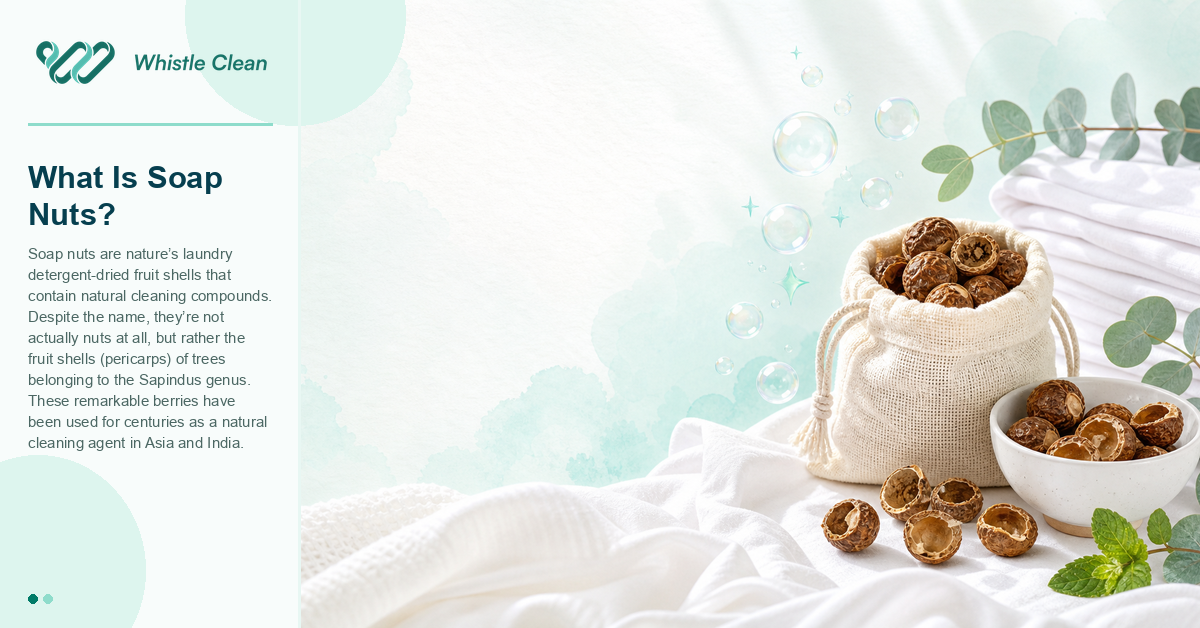
Soap nuts are nature’s laundry detergent-dried fruit shells that contain natural cleaning compounds. Despite the name, they’re not actually nuts at all, but rather the fruit shells (pericarps) of trees belonging to the Sapindus genus. These remarkable berries have been used for centuries as a natural cleaning agent in Asia and India.
Where does Soap Nuts come from?
Soap nuts grow on the Sapindus Mukorossi tree, commonly called the soapberry tree, which is native to the foothills of the Himalayas in India and Nepal. The trees also grow in other parts of Asia, including China and Indonesia. After the soapberry fruit ripens, it’s harvested, and the seeds are removed, leaving behind the valuable shells that we use for cleaning. The shells are then dried in the sun, turning them into the brown, sticky soap nuts sold for household use.
What does Soap Nuts look like and how is Soap Nuts generally used?
Soap nuts look like small, brown, wrinkled shells-similar in appearance to dried apple peels or shriveled berries. They’re typically about 1-2 inches in diameter and have a sticky, slightly tacky texture when fresh. The shells are golden to dark brown in color and often appear slightly translucent.
To use soap nuts, you typically place 4-6 shells in a small cotton or muslin bag and toss it directly into your washing machine with your laundry. The agitation and warm water cause the shells to release saponin, the natural cleaning compound. You can reuse the same shells for 3-5 loads of laundry before they lose their effectiveness-they’ll become pale, thin, and brittle when depleted.
Other Names for Soap Nuts
What are Soap Nutss other names or chemical terms?
Soap nuts go by several different names depending on the region and context:
- Soapberries (the most accurate common name)
- Washing nuts
- Reetha (Hindi name)
- Aritha (Sanskrit name)
- Doadni or Dodan (regional Indian names)
- Sapindus Mukorossi (scientific/botanical name)
The active cleaning ingredient in soap nuts is called saponin, a natural surfactant. Chemically speaking, saponins are glycosides-compounds that foam when agitated in water and have both water-loving (hydrophilic) and oil-loving (lipophilic) properties, which is what makes them effective cleaners.
Are there different grades, forms, or strengths of Soap Nuts?
Yes, soap nuts come in several different forms and quality grades:
Forms:
- Whole shells – The most common form, sold as dried half-shells
- Powder – Ground soap nut shells that dissolve more quickly
- Liquid extract – Concentrated saponin solution made by boiling soap nuts
- Pellets or tablets – Compressed soap nut powder for convenience
Grades:
- Grade A – Large, intact shells with high saponin content (best for laundry)
- Grade B – Smaller or broken pieces, still effective but less aesthetic
- Grade C – Small fragments or powder, often used for making liquid solutions
The saponin content can vary from 10-15% depending on the harvest, storage conditions, and tree species. Sapindus Mukorossi typically has higher saponin content than other varieties like Sapindus Trifoliatus.
Cleaning Uses
How is Soap Nuts used in home cleaning?
Soap nuts are incredibly versatile and can be used throughout your home:
Laundry – The most popular use. Place 4-6 shells in a wash bag and add to your machine. They work in both standard and HE (high-efficiency) washers.
All-purpose cleaner – Boil 15-20 soap nuts in 6 cups of water for 30 minutes, strain, and use the liquid to clean countertops, floors, and bathroom surfaces.
Dish soap – Use diluted soap nut liquid for hand-washing dishes (not recommended for dishwashers as it produces minimal suds).
Window and glass cleaner – Dilute soap nut liquid with water in a spray bottle for streak-free windows.
Jewelry cleaner – Soak jewelry in mild soap nut solution to remove tarnish and dirt.
Pet shampoo – The liquid can be used as a gentle, natural shampoo for dogs (avoid eyes).
What are the best surfaces or areas to clean with Soap Nuts?
Soap nuts work excellently on:
- Fabrics and textiles – Clothing, linens, towels, cloth diapers, delicates
- Hard floors – Tile, laminate, sealed hardwood, vinyl
- Bathroom fixtures – Sinks, tubs, toilets, shower doors
- Kitchen surfaces – Countertops (sealed stone), stovetops, appliances
- Windows and mirrors – Leaves no streaks or residue
- Outdoor items – Patio furniture, car exteriors, gardening tools
Soap nuts are particularly effective on moderately soiled items and everyday cleaning tasks. They excel at removing body oils, light food stains, and general household dirt.
Can Soap Nuts be mixed safely with other cleaning ingredients?
Soap nuts can be safely combined with several natural cleaning ingredients:
Safe combinations:
- Baking soda – Adds gentle abrasive power and deodorizing properties
- Essential oils – Tea tree, lavender, or lemon oil add fragrance and antimicrobial properties
- Washing soda – Boosts cleaning power for heavily soiled laundry
- Borax – Enhances stain removal and whitening (use sparingly)
- Salt – Adds mild abrasive action for scrubbing
Avoid mixing with:
- Vinegar – The acidity can reduce the effectiveness of saponins and may cause them to break down prematurely
- Lemon juice – Same issue as vinegar due to acidity
- Hydrogen peroxide – No dangerous reaction, but they work through different mechanisms and don’t enhance each other
Bleach compatibility – Soap nuts should not be mixed with chlorine bleach, as this creates unnecessary chemical exposure and the bleach will overpower the gentle soap nut action anyway.
Safety and Storage
What should you do or avoid when using Soap Nuts?
Do:
- Use warm or hot water for best results (saponins release more effectively)
- Store in an airtight container in a cool, dry place
- Test on a small, inconspicuous area before using on new surfaces
- Use a wash bag to contain the shells and prevent them from clogging drains
- Check shells after each use-discard when they become pale and papery
- Keep the liquid refrigerated if you make a large batch (lasts 1-2 weeks)
Avoid:
- Ingesting soap nuts-they’re toxic if eaten and can cause stomach upset
- Getting soap nut liquid in eyes-it will sting and cause irritation
- Using on unsealed wood, marble, or porous stone without testing first
- Expecting heavy-duty stain removal-soap nuts are gentle cleaners
- Using in cold water cycles (they won’t release enough saponin)
- Leaving children or pets unsupervised around soap nuts
Which cleaning mixtures or surfaces are unsafe?
Unsafe surfaces:
- Unsealed marble or limestone – The saponins can potentially etch or dull the surface over time
- Unsealed wood – May cause water damage or discoloration
- Cast iron cookware – Can strip the seasoning
- Copper or brass – May not provide enough cleaning power and could leave residue
Problematic applications:
- Dishwashers – Soap nuts don’t produce enough suds and may not clean effectively in automatic dishwashers
- Heavy grease – Not powerful enough for engine grease, baked-on oven grime, or industrial soils
- Disinfection needs – Soap nuts clean but don’t disinfect or kill bacteria effectively
How should Soap Nuts be stored for freshness and safety?
Proper storage is essential to maintain soap nut effectiveness:
Dry shells:
- Store in an airtight container (glass jar, plastic container with tight lid, or resealable bag)
- Keep in a cool, dry location away from humidity
- Avoid direct sunlight, which can degrade saponins
- Shelf life: 2-3 years when stored properly
- Keep away from children and pets (choking hazard and toxic if consumed)
Liquid soap nut solution:
- Store in a glass bottle or jar in the refrigerator
- Shelf life: 1-2 weeks refrigerated, 3-4 days at room temperature
- Add a few drops of vitamin E oil or grapefruit seed extract to extend shelf life
- Discard if you notice mold, cloudiness, or off odors
- Freeze in ice cube trays for longer storage (up to 6 months)
Signs of degradation:
- Shells become extremely brittle and crumble to dust
- Liquid develops mold or unpleasant smell
- Shells lose their sticky, tacky feel completely
- Solution no longer produces any foam when shaken
Why Soap Nuts Works
Why does Soap Nuts clean so well?
Soap nuts clean effectively because they contain natural saponins, which are nature’s own surfactants. When soap nuts come into contact with water and agitation, they release these saponins, which reduce the surface tension of water. This allows water to penetrate fabrics and surfaces more easily, lifting away dirt, oils, and grime.
The key to their cleaning power lies in the unique molecular structure of saponins. Each saponin molecule has two distinct ends: one that attracts water (hydrophilic) and one that attracts oil and grease (lipophilic). This dual nature allows saponins to surround dirt and oil particles, break them apart from surfaces, and suspend them in water so they can be rinsed away.
What chemical reaction or property makes Soap Nuts effective?
The cleaning action of soap nuts is based on surface chemistry rather than a chemical reaction:
The saponin mechanism:
-
Surface tension reduction – Saponins lower water’s surface tension from about 72 dynes/cm to approximately 30 dynes/cm, allowing water to spread and penetrate rather than bead up.
-
Micelle formation – Saponin molecules arrange themselves into spherical structures called micelles. The oil-loving tails point inward (trapping grease and dirt), while the water-loving heads point outward (keeping the structure suspended in water).
-
Emulsification – Saponins break large oil droplets into tiny droplets that remain dispersed in water, preventing them from redepositing on surfaces.
-
Foam production – When agitated, saponins create foam that helps lift and carry away dirt particles.
Chemical properties:
- pH level: Soap nut solution is mildly acidic to neutral (pH 5.5-7)
- Biodegradable: Saponins break down naturally without environmental harm
- Gentle: Won’t strip natural oils excessively or damage most fabrics
- Non-ionic: Unlike some synthetic detergents, saponins don’t leave ionic residues
This natural cleaning mechanism is remarkably similar to synthetic detergents but without the harsh chemicals, synthetic fragrances, or environmental concerns.
DIY Cleaning Recipes
What easy homemade cleaner recipes use Soap Nuts?
Basic Soap Nut Liquid (All-Purpose Cleaner)
- 15-20 soap nut shells
- 6 cups water
- Boil for 30 minutes, strain, cool, and store in a spray bottle
- Use on counters, floors, and general surfaces
Laundry Detergent Booster
- 4-6 soap nuts in a wash bag
- 1/4 cup washing soda
- 10 drops essential oil (optional)
- Add all to washing machine for enhanced cleaning
Window and Glass Cleaner
- 1 cup soap nut liquid
- 1 cup water
- Mix in spray bottle for streak-free shine
Foaming Hand Soap
- 1/4 cup soap nut liquid
- 3/4 cup water
- 1 tablespoon vegetable glycerin
- 10 drops essential oil
- Combine in foaming soap dispenser
Floor Cleaner
- 1/2 cup soap nut liquid
- 1 gallon warm water
- 5 drops tea tree oil (optional)
- Mop floors as usual
Gentle Dish Soap
- 2 cups soap nut liquid (concentrated)
- 1 tablespoon vegetable glycerin
- 10 drops lemon essential oil
- Store in pump bottle
What are the best ingredient combinations for Soap Nuts?
For enhanced cleaning power:
- Soap nuts + washing soda + borax = Heavy-duty laundry detergent
- Soap nuts + baking soda = Gentle scrubbing cleaner
- Soap nuts + essential oils = Antibacterial surface cleaner
For fabric care:
- Soap nuts + white vinegar (in rinse cycle only) = Fabric softener effect
- Soap nuts + oxygen bleach = Whitening and brightening
- Soap nuts + lavender oil = Fresh-smelling laundry
For tough jobs:
- Soap nuts + washing soda + hot water = Grease-cutting kitchen cleaner
- Soap nuts + salt = Abrasive scrub for sinks and tubs
- Soap nuts + tea tree oil = Mold and mildew bathroom cleaner
For delicate tasks:
- Soap nuts + glycerin = Gentle hand soap
- Soap nuts + distilled water = Baby clothes wash
- Soap nuts + chamomile tea = Sensitive skin body wash
Common Problems and Solutions
What common problems can occur when cleaning with Soap Nuts?
Problem 1: Laundry doesn’t smell fresh or clean
Soap nuts are fragrance-free and don’t leave the artificial "clean" scent that commercial detergents do. Many people mistake the absence of perfume for ineffective cleaning.
Problem 2: Clothes come out with stains still visible
Soap nuts are gentle cleaners and may not remove heavy stains, set-in grease, or protein-based stains (blood, egg) as effectively as synthetic detergents.
Problem 3: Liquid soap nut solution goes bad quickly
The natural solution has no preservatives and can develop mold or bacterial growth within days at room temperature.
Problem 4: Soap nuts don’t seem to work in cold water
Saponins require warmth to release effectively from the shells. Cold water cycles produce minimal cleaning action.
Problem 5: White residue or film on dishes or clothes
This can occur in hard water areas where minerals interact with saponins, or when too many soap nuts are used.
Problem 6: Allergic reactions or skin irritation
While rare, some people are sensitive to saponins and may experience itching or rashes.
How can these issues be prevented or solved?
Solution for lack of scent:
- Add 5-10 drops of your favorite essential oil to the wash bag with soap nuts
- Use scented wool dryer balls
- Hang laundry in fresh air to dry
- Remember: clean doesn’t have to smell like anything
Solution for stubborn stains:
- Pre-treat stains with a paste of washing soda and water
- Use oxygen bleach (like OxiClean) alongside soap nuts for whitening
- Apply soap nut liquid directly to stains before washing
- Use hot water when fabric allows
- For protein stains, pre-soak in cold water first
Solution for liquid spoilage:
- Make smaller batches that you’ll use within a week
- Refrigerate all liquid soap nut solutions
- Add 1/2 teaspoon of vegetable glycerin or vitamin E oil as a natural preservative
- Freeze in ice cube trays for long-term storage
- Look for mold or smell before each use
Solution for cold water ineffectiveness:
- Make concentrated liquid ahead of time and add to cold washes
- Use soap nut powder, which dissolves more easily
- Switch to warm or hot water when possible
- Use more shells (6-8 instead of 4-6) for cold water cycles
Solution for white residue:
- Use fewer soap nuts (start with 3-4 shells)
- Add 1/4 cup white vinegar to the rinse cycle to combat hard water
- Install a water softener if you have very hard water
- Run an extra rinse cycle
- Use soap nut liquid instead of shells for better control
Solution for skin sensitivity:
- Ensure you’re running adequate rinse cycles
- Use fewer soap nuts per load
- Add vinegar to the rinse cycle to remove all soap nut residue
- Test soap nuts on a small fabric sample against your skin before full loads
- If reactions persist, discontinue use-even natural products can cause allergies
Environmental and Health Impact
Is Soap Nuts safe for health and the environment?
Health safety:
Soap nuts are generally very safe for most people and are particularly beneficial for those with sensitive skin, allergies, or chemical sensitivities. They’re:
- Hypoallergenic – Free from synthetic fragrances, dyes, and harsh chemicals that commonly cause reactions
- Non-toxic – Safe for use around children and pets (though not for consumption)
- Gentle on skin – The natural saponins are mild and don’t strip skin’s natural oils excessively
- No harmful fumes – Unlike bleach or ammonia-based cleaners, soap nuts don’t emit dangerous vapors
Important health notes:
- Soap nuts are toxic if ingested and can cause vomiting and diarrhea
- Keep away from eyes-saponins will cause stinging and irritation
- Some people with tree nut allergies worry about cross-reactivity, but soap nuts are fruits, not nuts, and reactions are extremely rare
- Always supervise children and pets around soap nuts
Environmental benefits:
Soap nuts are one of the most eco-friendly cleaning options available:
- 100% biodegradable – Saponins break down completely without leaving harmful residues
- Greywater safe – Wastewater from soap nut cleaning can be used to water plants (unlike synthetic detergents)
- Renewable resource – Soap nut trees produce fruit annually for decades
- Minimal processing – Simply harvested, dried, and packaged with no chemical manufacturing
- Plastic-free packaging – Often sold in paper or cloth bags
- No water pollution – Won’t contribute to algae blooms or aquatic ecosystem damage
- Low carbon footprint – Especially when sourced sustainably
Sustainability considerations:
While soap nuts are environmentally friendly, there are some concerns about the growing global demand:
- Overharvesting – Increased Western demand has raised prices in regions where soap nuts are traditionally used
- Transportation impact – Shipping from India/Nepal to other countries adds carbon emissions
- Local availability – High export demand may reduce availability for local communities who’ve used them for generations
Verdict: Soap nuts are safe and environmentally beneficial when sourced responsibly. They’re an excellent choice for eco-conscious households, but consider supporting fair-trade suppliers and using them mindfully.
Soap Nuts FAQs
Can Soap Nuts be mixed with vinegar or hydrogen peroxide?
Vinegar: It’s best to avoid mixing soap nuts directly with vinegar in the same cleaning solution. Vinegar is acidic (pH 2-3), and this acidity can interfere with the saponins’ effectiveness by altering their molecular structure. However, you can use them in sequence-clean with soap nuts first, then use vinegar as a rinse or separate cleaning step. In laundry, adding vinegar to the rinse cycle (not the wash cycle with soap nuts) is perfectly fine and can help soften fabrics and remove any residue.
Hydrogen peroxide: Soap nuts and hydrogen peroxide don’t react dangerously, but they work through completely different mechanisms. Hydrogen peroxide is an oxidizing agent and disinfectant, while soap nuts are surfactants that physically remove dirt. Mixing them doesn’t create a hazard, but it doesn’t enhance cleaning either-you’re better off using each for its specific purpose. Use hydrogen peroxide when you need disinfection or whitening, and soap nuts for general cleaning and degreasing.
Is Soap Nuts safe for marble, stone, or wood surfaces?
Marble and limestone: Use caution with soap nuts on marble, limestone, travertine, and other calcium-based stones. While soap nuts are much gentler than acidic cleaners (which will definitely damage marble), they can still potentially cause dulling over time, especially on unsealed or polished surfaces. Always test on an inconspicuous area first, use a very diluted solution, and dry immediately. For valuable marble, stick to pH-neutral cleaners specifically designed for stone.
Granite and sealed stone: Soap nuts are generally safe for sealed granite and harder stones. The mild nature of saponins won’t damage the sealant or the stone itself. Use a diluted solution and avoid leaving standing water.
Wood surfaces:
- Sealed wood (polyurethane, varnish) – Safe to use with a well-wrung cloth; don’t oversaturate
- Unsealed wood – Not recommended, as any water-based cleaner can cause damage, warping, or discoloration
- Wood floors – Safe for sealed hardwood when properly diluted; use minimal moisture
Best practice: When in doubt, test any cleaner (including soap nuts) on a small, hidden area and wait 24 hours to check for adverse reactions.
Does Soap Nuts clean, disinfect, or both?
Soap nuts clean but do not disinfect. This is an important distinction:
Cleaning means physically removing dirt, grime, oils, and debris from surfaces. Soap nuts excel at this through their surfactant action-they lift and suspend particles so they can be rinsed away.
Disinfecting means killing bacteria, viruses, and other pathogens. Soap nuts do not have significant antimicrobial properties and won’t kill germs the way disinfectants like bleach, alcohol, or quaternary ammonium compounds do.
The practical reality:
- For everyday cleaning (laundry, dishes, counters), removing dirt and grime is usually sufficient
- Physical removal of germs through washing is actually highly effective-you don’t always need to kill germs
- For high-risk situations (illness in the home, food preparation surfaces, bathrooms), you may need to follow soap nut cleaning with a proper disinfectant
When you need disinfection:
- Use soap nuts to clean first (removing organic matter)
- Follow with hydrogen peroxide, diluted bleach, or another EPA-registered disinfectant
- Or use soap nuts for general cleaning and reserve disinfectants for specific high-touch surfaces
Bottom line: Soap nuts are excellent for routine cleaning and reducing chemical exposure, but they shouldn’t be relied upon for sanitizing or disinfecting when pathogen control is necessary.
Conclusion
Soap nuts offer a gentle, natural, and environmentally friendly alternative to conventional cleaning products. While they may not tackle every heavy-duty cleaning challenge, they excel at everyday cleaning tasks and are particularly valuable for people with sensitivities to synthetic chemicals. By understanding their properties, proper usage, and limitations, you can effectively incorporate soap nuts into your natural cleaning routine while maintaining realistic expectations about their capabilities.
Whether you’re drawn to soap nuts for environmental reasons, health concerns, or simple curiosity about traditional cleaning methods, they represent a time-tested solution that’s been trusted for centuries-and they’re just as relevant in today’s eco-conscious homes.