
Castile Soap for cleaning is a plant-based, biodegradable soap traditionally made from olive oil, known for its gentle effectiveness and versatility in various cleaning tasks. Originating from the Castile region of Spain, this soap’s formulation has expanded to include other vegetable oils such as coconut, hemp, and jojoba, enhancing its lathering and moisturizing properties. Distinguished by its lack of animal fats and synthetic ingredients, Castile soap serves as an eco-friendly alternative to conventional soaps that often contain harsh chemicals.
Related ingredients: our natural cleaning ingredient guides, dr. bronner’s sal suds, and soap nuts.
In household cleaning, Castile soap is celebrated for its safety and efficacy on diverse surfaces, from dishes and laundry to floors and windows. Its hypoallergenic nature makes it suitable for people with sensitive skin or allergies. In an era increasingly focused on environmental sustainability, Castile soap’s biodegradable qualities and minimalistic packaging options appeal to eco-conscious consumers, promoting a reduction in plastic waste and the avoidance of toxic pollutants in waterways. The adaptability of Castile soap extends to personal hygiene, where it is used in formulations for body washes, shampoos, and other toiletries, offering a holistic approach to cleanliness that aligns with healthful and environmentally responsible living practices.
What Is Castile Soap?
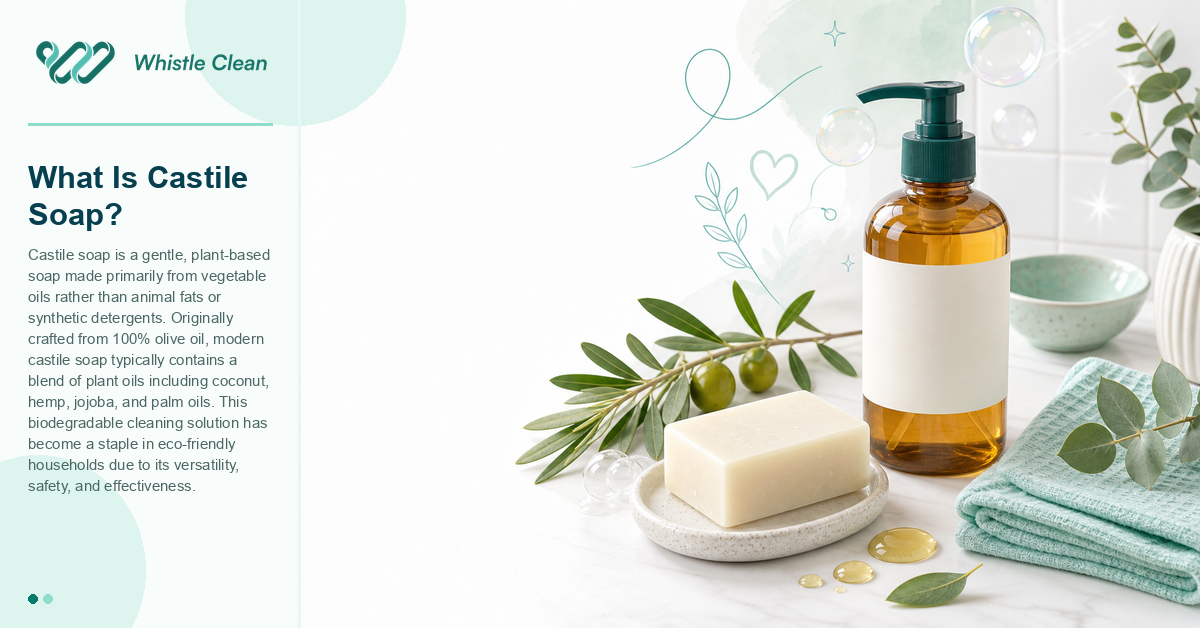
Castile soap is a gentle, plant-based soap made primarily from vegetable oils rather than animal fats or synthetic detergents. Originally crafted from 100% olive oil, modern castile soap typically contains a blend of plant oils including coconut, hemp, jojoba, and palm oils. This biodegradable cleaning solution has become a staple in eco-friendly households due to its versatility, safety, and effectiveness.
Where does Castile Soap come from?
Castile soap originated in the Castile region of Spain during the 11th century, where soapmakers created a distinctive white soap using abundant local olive oil. This was revolutionary at the time, as most soaps were made from animal fats. The soap gained popularity across Europe for its mildness and purity. Today, while the production has spread worldwide, authentic castile soap still follows the traditional principle of using plant-based oils as its primary ingredient.
What does Castile Soap look like and how is Castile Soap generally used?
Castile soap typically comes in two forms: liquid and bar. Liquid castile soap ranges from clear to amber in color and has a thin, slightly slippery consistency. Bar castile soap is usually off-white to light brown and has a smooth, hard texture. The soap produces a moderate lather and has a mild, natural scent-though many brands add essential oils for fragrance.
For cleaning purposes, castile soap is most commonly used in its liquid form, diluted with water at various ratios depending on the cleaning task. It can be applied with spray bottles, mop buckets, or directly on cleaning cloths.
Other Names for Castile Soap
What are Castile Soaps other names or chemical terms?
Castile soap may be labeled or referred to by several names:
- Vegetable soap or plant-based soap
- Olive oil soap (when made from 100% olive oil)
- Saponified oils (the chemical term for the soap-making process)
- Specific brand names like "Dr. Bronner’s" (the most popular commercial brand)
- Marseille soap (a similar French variant, though technically different)
Chemically, castile soap consists of potassium salts of fatty acids (in liquid form) or sodium salts of fatty acids (in bar form), derived from vegetable oils.
Are there different grades, forms, or strengths of Castile Soap?
Yes, castile soap comes in several variations:
Forms:
- Liquid castile soap – Most popular for cleaning, comes concentrated
- Bar castile soap – Traditional solid form, can be grated for cleaning solutions
- Castile soap flakes – Pre-grated for easy dissolving
Concentrations:
- Pure concentrated castile soap – Requires dilution (typical retail bottles)
- Pre-diluted formulas – Ready-to-use sprays and solutions
- Super-concentrated versions – Professional-grade products
Oil compositions:
- 100% olive oil – Traditional, mildest formula
- Blended oils – Contains coconut, hemp, or other plant oils for different properties
- Scented varieties – Infused with essential oils like peppermint, lavender, or tea tree
The concentration and oil blend affect cleaning power, with coconut oil-based formulas producing more lather and stronger cleaning action.
Cleaning Uses
How is Castile Soap used in home cleaning?
Castile soap is remarkably versatile for household cleaning applications:
All-purpose cleaning: Mix 1/4 cup castile soap with 1 quart of warm water for countertops, appliances, and general surfaces.
Floor cleaning: Add 1/2 cup to a bucket of hot water for mopping hardwood, tile, or linoleum floors.
Dish soap: Use 1-2 squirts directly on a sponge or add 1 tablespoon to a sink of water.
Laundry detergent: Add 1/3 cup to a regular load of laundry (1/2 cup for heavily soiled items).
Window and glass cleaner: Combine 1 tablespoon castile soap with 1 quart of water in a spray bottle.
Bathroom cleaning: Use 1/4 cup in warm water for toilets, tubs, and sinks.
What are the best surfaces or areas to clean with Castile Soap?
Castile soap works exceptionally well on:
Ideal surfaces:
- Sealed hardwood floors
- Tile and grout
- Laminate countertops
- Stainless steel appliances
- Glass and mirrors (in proper dilution)
- Porcelain and ceramic fixtures
- Painted walls
- Plastic and vinyl surfaces
- Fabric upholstery (spot cleaning)
Particularly effective for:
- Kitchen grease and food residue
- Bathroom soap scum
- General dirt and grime
- Pet bowls and toys
- Children’s toys and surfaces
The soap’s gentle nature makes it safe for most washable surfaces without causing damage or discoloration.
Can Castile Soap be mixed safely with other cleaning ingredients?
Castile soap can be safely combined with several ingredients, but caution is necessary:
Safe combinations:
- Water – Essential for proper dilution
- Essential oils – Tea tree, lavender, lemon for scent and additional properties
- Baking soda – Creates a gentle scrubbing paste
- Salt – Adds abrasive cleaning power
- Vegetable glycerin – Prevents soap from drying out surfaces
UNSAFE combinations:
- Vinegar – Creates acidic reaction that neutralizes soap’s cleaning ability and forms residue
- Lemon juice – Same acidic problem as vinegar
- Hydrogen peroxide – May reduce effectiveness of both products
- Commercial detergents – Can create unpredictable reactions
Important note: While castile soap and vinegar are both excellent cleaners, they should never be mixed together. Use them separately for best results.
Safety and Storage
What should you do or avoid when using Castile Soap?
Best practices:
- Always dilute concentrated castile soap according to your cleaning task
- Test on inconspicuous areas before using on new surfaces
- Rinse thoroughly to prevent soap residue buildup
- Use warm or hot water for better cleaning performance
- Shake diluted solutions before each use as separation may occur
- Wear gloves if you have sensitive skin during extended cleaning sessions
What to avoid:
- Don’t use undiluted on skin or surfaces (except as directed)
- Avoid using in hard water without adjustments (add baking soda to soften)
- Don’t expect heavy disinfection-castile soap cleans but doesn’t kill all germs
- Avoid getting concentrated soap in eyes
- Don’t use excessive amounts (more soap doesn’t mean cleaner surfaces)
Which cleaning mixtures or surfaces are unsafe?
Unsafe surface applications:
- Natural stone (unsealed marble, granite, limestone) – The alkaline pH can etch and dull the surface
- Unsealed wood – May cause warping or water damage
- Waxed furniture – Can strip away protective wax coating
- Certain metals – May tarnish copper, brass, or aluminum
- Electronics – Liquid can damage components
Hazardous mixtures to avoid:
- Castile soap + vinegar = Neutralized cleaning power, greasy residue
- Castile soap + acidic cleaners = Ineffective cleaning
- Castile soap + bleach = While not as dangerous as some combinations, it reduces effectiveness of both
Hard water caution: In areas with hard water, castile soap can leave a white film or scum. Add 1 tablespoon of baking soda per cup of soap to counteract this issue.
How should Castile Soap be stored for freshness and safety?
Proper storage guidelines:
Concentrated castile soap:
- Store in original container with cap tightly sealed
- Keep in a cool, dark place away from direct sunlight
- Ideal temperature: 50-80°F (10-27°C)
- Shelf life: 2-3 years unopened, 1-2 years after opening
- Keep away from children and pets
Diluted solutions:
- Use within 1-2 weeks for best results
- Store in clean, labeled spray bottles or containers
- Refrigerate if keeping longer than one week
- Shake before each use to recombine separated ingredients
- Discard if solution develops unusual odor or appearance
Storage tips:
- Glass or HDPE plastic containers work best
- Avoid metal containers which may react with soap
- Label all diluted solutions with contents and date
- Keep away from extreme temperatures
- Store away from food items
Why Castile Soap Works
Why does Castile Soap clean so well?
Castile soap’s cleaning effectiveness stems from its unique molecular structure and chemical properties. Each soap molecule has two distinct ends: a hydrophilic (water-loving) head and a hydrophobic (water-fearing) tail that attracts oils and grease.
When you clean with castile soap, these molecules surround dirt, oil, and grime particles. The hydrophobic tails attach to the oils and grease, while the hydrophilic heads remain in the water. This creates tiny structures called micelles that trap the dirt and allow it to be rinsed away with water.
Unlike synthetic detergents, castile soap is made through saponification-a natural chemical process that creates a gentler, biodegradable cleaner that’s effective without harsh chemicals.
What chemical reaction or property makes Castile Soap effective?
The cleaning power of castile soap relies on several key properties:
Saponification process: Vegetable oils are combined with an alkali (potassium hydroxide for liquid soap, sodium hydroxide for bar soap) in a chemical reaction that produces soap molecules and glycerin. This process creates the amphiphilic molecules essential for cleaning.
Surface tension reduction: Castile soap lowers water’s surface tension, allowing it to spread more easily and penetrate dirt and grime more effectively. This helps water "wet" surfaces better and reach into crevices.
Emulsification: The soap’s molecular structure allows it to emulsify oils and fats, breaking them into tiny droplets that can be suspended in water and rinsed away.
pH level: Castile soap is mildly alkaline (pH 8.9-10), which helps break down acidic dirt, grease, and organic matter without being harsh enough to damage most surfaces.
Micelle formation: In water, soap molecules spontaneously organize into spherical structures (micelles) with dirt-attracting tails pointing inward and water-soluble heads pointing outward, effectively trapping and removing soil.
DIY Cleaning Recipes
What easy homemade cleaner recipes use Castile Soap?
All-Purpose Cleaner
- 1/4 cup liquid castile soap
- 2 cups warm water
- 20 drops tea tree or lemon essential oil (optional)
- Mix in spray bottle, shake before use
Heavy-Duty Degreaser
- 2 tablespoons castile soap
- 2 cups hot water
- 2 tablespoons baking soda
- 10 drops orange or lemon essential oil
- Combine in spray bottle, excellent for kitchen surfaces
Floor Cleaner
- 1/2 cup castile soap
- 1 gallon hot water
- 10 drops lavender or pine essential oil
- Mix in bucket, mop as usual
Soft Scrub Paste
- 1/2 cup baking soda
- 2 tablespoons castile soap
- 1 tablespoon water (add more if needed)
- Mix to paste consistency, use on tubs, sinks, and tile
Window and Glass Cleaner
- 1 tablespoon castile soap
- 3 cups water
- 1 tablespoon cornstarch (prevents streaking)
- Spray and wipe with microfiber cloth
Toilet Bowl Cleaner
- 1/4 cup castile soap
- 1/4 cup baking soda
- 10 drops tea tree oil
- Apply to bowl, scrub, and let sit 10 minutes before flushing
Dish Soap
- 1 cup castile soap
- 1 tablespoon washing soda
- 10 drops lemon essential oil
- Store in pump bottle, use 1-2 pumps per sink
What are the best ingredient combinations for Castile Soap?
For enhanced cleaning power:
- Castile soap + baking soda = Gentle abrasive action
- Castile soap + washing soda = Boosted degreasing ability
- Castile soap + borax = Increased disinfecting properties
For specific purposes:
- Castile soap + tea tree oil = Antibacterial properties
- Castile soap + lavender oil = Pleasant scent, mild antiseptic
- Castile soap + eucalyptus oil = Deodorizing power
- Castile soap + lemon oil = Grease cutting, fresh scent
For hard water solutions:
- Castile soap + baking soda = Prevents soap scum
- Castile soap + citric acid = Added after cleaning to remove residue
For texture and consistency:
- Castile soap + vegetable glycerin = Prevents drying
- Castile soap + cornstarch = Reduces streaking on glass
- Castile soap + salt = Creates scrubbing texture
Proportions matter: Start with recommended ratios and adjust based on your water hardness and cleaning needs.
Common Problems and Solutions
What common problems can occur when cleaning with Castile Soap?
Problem 1: White film or soap scum residue
This is the most common issue, especially in hard water areas. The minerals in hard water (calcium and magnesium) react with castile soap to form an insoluble residue.
Problem 2: Greasy or slippery surfaces after cleaning
Usually caused by using too much soap or not rinsing thoroughly enough.
Problem 3: Reduced cleaning effectiveness
Often results from accidentally mixing castile soap with acidic substances or using old, separated solutions.
Problem 4: Streaky windows and mirrors
Occurs when soap concentration is too high or surfaces aren’t properly buffed.
Problem 5: Solution separation or cloudiness
Natural occurrence in diluted solutions, especially with temperature changes.
Problem 6: Excessive suds
More common with soft water or when too much soap is used, making rinsing difficult.
How can these issues be prevented or solved?
For white film/soap scum:
- Prevention: Add 1 tablespoon baking soda per cup of castile soap in cleaning solutions
- Solution: Wipe surfaces with diluted white vinegar (after cleaning, not mixed with soap), or use a solution of 1 part vinegar to 3 parts water
- Install a water softener if hard water is a persistent problem
- Use distilled water in cleaning solutions
For greasy surfaces:
- Prevention: Use proper dilution ratios (less is more)
- Solution: Rinse thoroughly with clean water, or wipe with a damp microfiber cloth multiple times
- Reduce the amount of soap in your next cleaning solution by half
For reduced effectiveness:
- Prevention: Never mix with vinegar or acidic cleaners; use fresh solutions
- Solution: Make a fresh batch of cleaning solution
- Store properly and use within recommended timeframes
- Shake diluted solutions before each use
For streaky glass:
- Prevention: Use only 1 tablespoon soap per quart of water for glass
- Solution: Add 1 tablespoon cornstarch to solution to prevent streaking
- Buff with dry microfiber cloth after cleaning
- Use newspaper or coffee filters for final polish
For solution separation:
- Prevention: Add a small amount of vegetable glycerin as an emulsifier
- Solution: Simply shake well before each use-separation is natural and doesn’t affect cleaning power
For excessive suds:
- Prevention: Use less soap (start with minimal amounts and increase only if needed)
- Solution: Rinse multiple times with clean water
- Add a small amount of white vinegar to rinse water (only during rinsing, not mixed with soap)
Is Castile Soap safe for health and the environment?
Health safety:
Castile soap is one of the safest cleaning products available for human health:
Benefits:
- Non-toxic and free from synthetic chemicals, sulfates, and parabens
- Hypoallergenic and suitable for sensitive skin
- Biodegradable and doesn’t leave harmful residues
- Safe around children and pets when properly diluted
- No harsh fumes or volatile organic compounds (VOCs)
- Gentle enough for body use as well as cleaning
Precautions:
- Concentrated soap can irritate eyes-flush immediately with water if contact occurs
- May cause dryness with prolonged skin contact-wear gloves for extended cleaning
- Ingestion of concentrated soap can cause stomach upset-keep away from children
- Some people may be sensitive to essential oils added to formulations
Environmental safety:
Castile soap is exceptionally eco-friendly:
Positive environmental impacts:
- Completely biodegradable, breaking down naturally in water systems
- Made from renewable plant resources
- No petroleum-based ingredients
- Doesn’t contribute to water pollution
- Minimal environmental impact in production
- Often packaged in recyclable containers
- Concentrated formulas reduce packaging waste
- Safe for septic systems and greywater systems
Considerations:
- Palm oil sourcing can be problematic-look for sustainably sourced or palm-free options
- Soap entering waterways can affect aquatic life in high concentrations (though far less than synthetic detergents)
- Proper dilution reduces environmental load
Certifications to look for:
- USDA Organic
- Fair Trade
- Leaping Bunny (cruelty-free)
- Rainforest Alliance (sustainable palm oil)
- Biodegradable certification
Overall, castile soap is one of the most health-conscious and environmentally responsible cleaning options available, making it ideal for green cleaning practices.
Castile Soap FAQs
Can Castile Soap be mixed with vinegar or hydrogen peroxide?
Castile soap and vinegar: No, these should never be mixed together. Castile soap is alkaline (basic) while vinegar is acidic. When combined, they neutralize each other, creating a chemical reaction that produces fatty acids-essentially returning the soap to its original oil form. This results in a greasy, ineffective residue rather than a cleaning solution.
However, you can use them sequentially: clean with castile soap first, rinse thoroughly, then use vinegar as a separate rinse or cleaning step. This one-two approach can be very effective, especially in bathrooms.
Castile soap and hydrogen peroxide: These can technically be mixed, but it’s not recommended. The combination doesn’t create dangerous fumes like some chemical mixtures, but the hydrogen peroxide may reduce the soap’s effectiveness, and the soap can cause the peroxide to decompose more quickly, reducing its disinfecting properties.
Better approach: Use hydrogen peroxide separately for disinfecting, then clean with castile soap, or vice versa. Allow surfaces to dry between applications for maximum effectiveness.
Is Castile Soap safe for marble, stone, or wood surfaces?
Marble and natural stone: Use with extreme caution or avoid entirely. Castile soap’s alkaline pH (8.9-10) can gradually etch and dull marble, limestone, travertine, and other calcium-based stones. If you must use it:
- Dilute heavily (1 teaspoon per quart of water)
- Test in an inconspicuous area first
- Rinse immediately and thoroughly
- Use only occasionally, not as regular cleaner
- Better option: pH-neutral stone cleaners
Sealed granite and engineered stone: Generally safe when properly diluted, as the sealant provides protection. Still rinse thoroughly.
Wood surfaces:
- Sealed/finished wood: Safe when properly diluted (1-2 tablespoons per quart of water). Don’t oversaturate; use damp cloth only.
- Unsealed/raw wood: Not recommended-can cause water damage, warping, or staining.
- Wood floors: Excellent for sealed hardwood floors; use 1/2 cup per gallon of water.
- Wood furniture: Safe on sealed furniture; test first and use sparingly.
Best practice: When in doubt, test any surface in a hidden area and wait 24 hours to check for damage before proceeding.
Does Castile Soap clean, disinfect, or both?
Castile soap is a cleaner, not a disinfectant. Understanding this distinction is crucial:
What castile soap does:
- Cleans: Removes dirt, grime, grease, and organic matter through mechanical action
- Reduces germs: Physically removes bacteria and viruses from surfaces (washing them away)
- Sanitizes to some degree: Reduces microbial load but doesn’t kill all pathogens
- Some antimicrobial properties from essential oils (like tea tree), but not EPA-registered disinfection
What castile soap doesn’t do:
- Disinfect: Doesn’t kill 99.9% of bacteria and viruses required for disinfection claims
- Sterilize: Doesn’t eliminate all microorganisms
- Meet EPA standards: Not registered as an antimicrobial pesticide
For most household cleaning: Castile soap’s cleaning action is sufficient. Studies show that proper cleaning with soap and water removes up to 90% of germs, which is adequate for typical household hygiene.
When you need disinfection:
- After handling raw meat
- During illness outbreaks
- High-touch surfaces during cold/flu season
- Bathroom fixtures
- Childcare areas
Solution: Clean first with castile soap (removes organic matter that shields germs), then disinfect with:
- Hydrogen peroxide (3% solution, let sit 5-10 minutes)
- Rubbing alcohol (70% isopropyl alcohol)
- EPA-registered disinfectant
The two-step process (clean then disinfect) is more effective than disinfecting alone, as disinfectants work best on clean surfaces.
Final thoughts: Castile soap is a versatile, safe, and environmentally friendly cleaning solution that deserves a place in every home. While it may require some adjustment from conventional cleaners-particularly regarding dilution ratios and hard water considerations-its effectiveness, safety profile, and eco-friendly nature make it an excellent choice for conscious consumers. By understanding its properties, proper applications, and limitations, you can harness castile soap’s full potential for a cleaner, healthier home.