
Essential Oils for Cleaning are concentrated plant extracts utilized for their antimicrobial and aromatic properties in household sanitation. These oils, derived from the distillation or mechanical processing of various plants, contain potent phytochemicals effective in neutralizing pathogens and deodorizing environments. Common examples include lemon, tea tree, eucalyptus, and lavender oils, each known for specific cleaning capabilities such as cutting through grease or inhibiting mold growth. Research indicates their efficacy in reducing airborne bacteria when used in diffusers and improving indoor air quality. Their application extends to making natural cleaning solutions by combining with substances like vinegar or baking soda, providing a biodegradable alternative to chemical disinfectants. The global shift towards sustainable and health-conscious cleaning practices has escalated the use of essential oils, reflecting an increased consumer preference for products that are both eco-friendly and effective. These oils not only cleanse but also infuse spaces with natural fragrances, enhancing the psychological benefits of a clean environment.
Related ingredients: our natural cleaning ingredient guides, olive oil, and castile soap.
What Are Essential Oils?
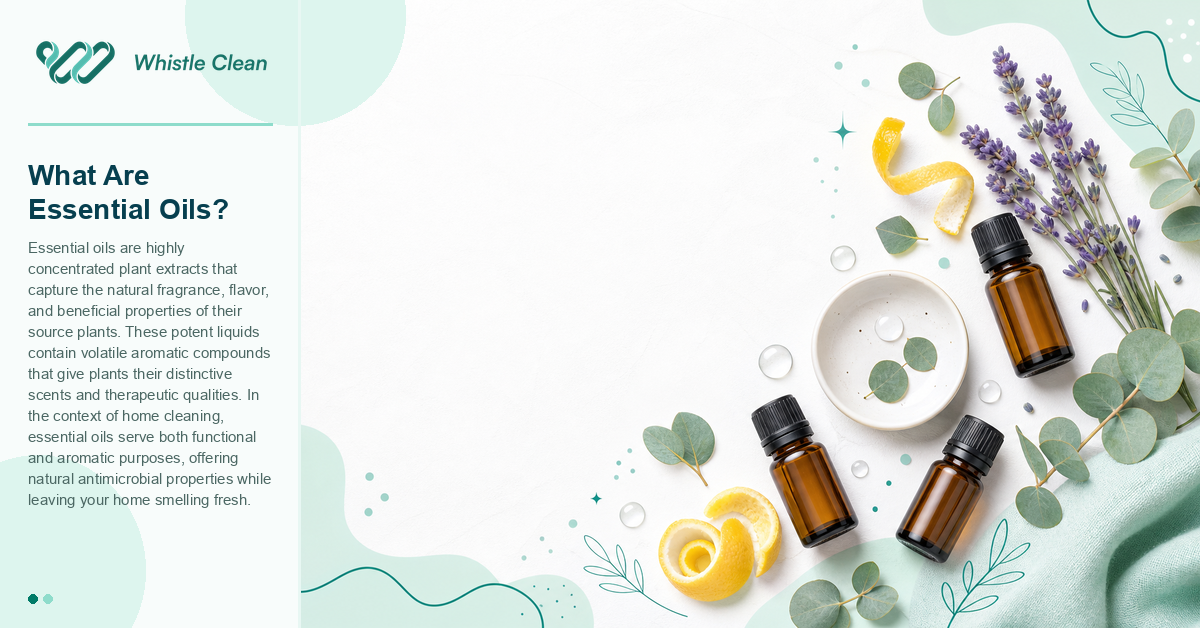
Essential oils are highly concentrated plant extracts that capture the natural fragrance, flavor, and beneficial properties of their source plants. These potent liquids contain volatile aromatic compounds that give plants their distinctive scents and therapeutic qualities. In the context of home cleaning, essential oils serve both functional and aromatic purposes, offering natural antimicrobial properties while leaving your home smelling fresh.
Where Do Essential Oils Come From?
Essential oils are extracted from various parts of plants, including:
- Leaves: Eucalyptus, peppermint, tea tree
- Flowers: Lavender, chamomile, ylang-ylang
- Peels: Lemon, orange, grapefruit
- Bark: Cinnamon, cedarwood
- Roots: Ginger, vetiver
- Seeds: Fennel, caraway
- Resin: Frankincense, myrrh
The extraction process typically involves steam distillation, cold pressing (especially for citrus oils), or solvent extraction. It takes large quantities of plant material to produce small amounts of essential oil-for example, it requires approximately 250 pounds of lavender flowers to produce just one pound of lavender essential oil.
What Do Essential Oils Look Like and How Are Essential Oils Generally Used?
Essential oils are typically clear to amber-colored liquids with varying viscosities. Most are thin and watery, though some (like sandalwood or patchouli) are thicker. They’re packaged in small, dark glass bottles (usually amber or cobalt blue) to protect them from light degradation.
For cleaning purposes, essential oils are:
- Diluted in carrier solutions (water, vinegar, or castile soap)
- Added to commercial cleaners for enhanced properties
- Mixed into DIY cleaning recipes at concentrations of 10-30 drops per cup of solution
- Used in diffusers to purify air and eliminate odors
Other Names for Essential Oils
What Are Essential Oils’ Other Names or Chemical Terms?
Essential oils may be referred to by various names:
- Volatile oils (due to their evaporative nature)
- Ethereal oils (older terminology)
- Plant essences
- Aromatic oils
- Specific botanical names (e.g., Melaleuca alternifolia for tea tree oil)
Individual essential oils contain specific chemical compounds:
- Limonene: Found in citrus oils, powerful degreaser
- Linalool: Present in lavender, antimicrobial properties
- Terpinen-4-ol: Tea tree’s primary antimicrobial compound
- Eucalyptol (1,8-cineole): Found in eucalyptus, antiviral properties
- Thymol: Present in thyme oil, strong disinfectant
Are There Different Grades, Forms, or Strengths of Essential Oils?
Yes, essential oils come in various qualities:
Quality Grades:
- Therapeutic grade: Pure, high-quality oils suitable for all uses
- Food grade: Safe for consumption and cleaning
- Perfume grade: May contain additives, less suitable for cleaning
- Synthetic/fragrance oils: Not true essential oils, less effective for cleaning
Forms:
- Pure essential oils: 100% plant extract
- Diluted oils: Pre-mixed with carrier oils
- Oil blends: Combinations of multiple essential oils
Important note: Terms like "therapeutic grade" aren’t regulated, so always verify purity through third-party testing certificates and reputable suppliers.
Cleaning Uses
How Are Essential Oils Used in Home Cleaning?
Essential oils enhance cleaning in multiple ways:
Antimicrobial Action: Many essential oils kill bacteria, viruses, and fungi, making them effective natural disinfectants.
Deodorizing: Rather than masking odors, essential oils neutralize them at the molecular level.
Grease Cutting: Citrus oils contain d-limonene, which breaks down oils and sticky residues.
Mold Prevention: Oils like tea tree and clove inhibit mold and mildew growth.
Common cleaning applications include:
- All-purpose sprays
- Floor cleaners
- Bathroom disinfectants
- Glass cleaners
- Laundry fresheners
- Furniture polish
- Air freshening sprays
What Are the Best Surfaces or Areas to Clean with Essential Oils?
Essential oils work effectively on:
Kitchen:
- Countertops (sealed surfaces)
- Stovetops
- Sinks
- Cutting boards (after washing)
- Refrigerator interiors
- Trash cans
Bathroom:
- Toilets
- Tile and grout
- Shower curtains
- Mirrors
- Sinks and faucets
Living Areas:
- Sealed hardwood floors
- Laminate surfaces
- Glass and windows
- Upholstery (test first)
- Carpets (for freshening)
Other Areas:
- Laundry
- Pet areas
- Garbage disposals
- Air purification
Can Essential Oils Be Mixed Safely with Other Cleaning Ingredients?
Yes, but with important precautions:
Safe Combinations:
- Essential oils + water: Basic spray cleaner
- Essential oils + castile soap: Gentle all-purpose cleaner
- Essential oils + baking soda: Scrubbing paste
- Essential oils + vodka or rubbing alcohol: Quick-drying disinfectant spray
- Essential oils + vinegar: Wait 5+ minutes after mixing before use (allows pH stabilization)
Safe Sequential Use (Not Mixed Together):
- Vinegar followed by hydrogen peroxide: Powerful disinfecting combination, but must be applied separately from different bottles
- Essential oils can be added to either solution separately
Never Mix:
- Essential oils + bleach: Creates toxic fumes
- Essential oils + ammonia: Produces dangerous vapors
- Vinegar + hydrogen peroxide in the same bottle: Creates unstable peracetic acid
Safety and Storage
What Should You Do or Avoid When Using Essential Oils?
Do:
- Always dilute essential oils before use (never apply pure oils to surfaces)
- Test on inconspicuous areas first
- Wear gloves if you have sensitive skin
- Ensure adequate ventilation
- Use appropriate concentrations (typically 10-15 drops per cup of cleaner)
- Keep away from children and pets during application
- Follow up with proper rinsing on food-contact surfaces
- Research individual oils before use
Avoid:
- Using undiluted essential oils on surfaces
- Applying to porous natural stone without testing
- Using photosensitizing oils (citrus) on surfaces exposed to direct sunlight
- Cleaning with essential oils around pets sensitive to certain compounds (especially cats)
- Ingesting cleaning solutions containing essential oils
- Using expired or oxidized oils
Which Cleaning Mixtures or Surfaces Are Unsafe?
Unsafe Surface Combinations:
- Unsealed wood: May cause staining or damage
- Unsealed natural stone (marble, granite, limestone): Citrus oils can etch surfaces
- Some plastics: Certain oils may cause cloudiness or deterioration
- Painted surfaces: Test first; some oils may affect finishes
- Leather: Can cause discoloration without proper dilution
- Waxed surfaces: May strip protective coatings
Dangerous Mixtures:
- Essential oils + chlorine bleach
- Essential oils + ammonia-based cleaners
- Concentrated oils in enclosed spaces without ventilation
Pet Safety Concerns:
- Toxic to cats: Tea tree, eucalyptus, citrus, pine, wintergreen, pennyroyal, ylang-ylang
- Potentially problematic for dogs: Tea tree (in high concentrations), wintergreen, pine
- Always ensure pets cannot access cleaning solutions or recently cleaned surfaces until dry
How Should Essential Oils Be Stored for Freshness and Safety?
Proper storage extends shelf life and maintains effectiveness:
Storage Guidelines:
- Dark glass bottles: Amber or cobalt blue prevent light degradation
- Cool, dark location: Away from heat sources and direct sunlight
- Tightly sealed: Prevent oxidation and evaporation
- Upright position: Prevents lid corrosion
- Away from children and pets: In locked cabinets if necessary
- Separate from food: In designated storage area
Shelf Life:
- Citrus oils: 1-2 years
- Most other oils: 2-3 years
- Woody/resinous oils: 4-8 years
- Properly stored oils in ideal conditions: May last longer
Signs of Degradation:
- Changed consistency (thickening)
- Altered smell
- Cloudiness
- Color changes
- Reduced effectiveness
Why Essential Oils Work
Why Do Essential Oils Clean So Well?
Essential oils clean effectively due to multiple mechanisms:
Antimicrobial Properties: Many essential oils disrupt bacterial cell membranes, leading to cell death. Research shows that tea tree, thyme, oregano, and cinnamon oils demonstrate significant antibacterial activity against common household pathogens.
Solvent Action: The chemical structure of certain essential oils (particularly citrus oils) allows them to dissolve oils, grease, and sticky residues that water alone cannot remove.
Antifungal Effects: Compounds in essential oils interfere with fungal cell walls and metabolic processes, preventing mold and mildew growth.
Odor Neutralization: Rather than simply masking smells, essential oils chemically bind with odor-causing molecules, neutralizing them.
What Chemical Reaction or Property Makes Essential Oils Effective?
The cleaning power of essential oils comes from their chemical composition:
Terpenes (like limonene in citrus oils):
- Lipophilic (fat-loving) properties dissolve grease and oils
- Low surface tension allows penetration into dirt and grime
- Evaporates cleanly without residue
Phenols (like thymol in thyme oil):
- Disrupt microbial cell membranes
- Denature proteins in bacteria
- Strong oxidizing properties
Alcohols (like linalool in lavender):
- Antimicrobial through cell membrane disruption
- Enhance penetration of other compounds
- Provide pleasant fragrance
Aldehydes (like citral in lemongrass):
- Antifungal and antibacterial effects
- React with proteins in microorganisms
- Provide fresh, clean scent
The combination of these compounds creates synergistic effects, meaning the whole oil is often more effective than isolated components.
DIY Cleaning Recipes
What Easy Homemade Cleaner Recipes Use Essential Oils?
All-Purpose Cleaner
- 2 cups water
- 2 tablespoons castile soap
- 20 drops essential oil (lemon, tea tree, or lavender)
- Mix in spray bottle, shake before use
Disinfecting Spray
- 1 cup water
- 1 cup white vinegar
- 20 drops tea tree oil
- 10 drops eucalyptus oil
- Combine in spray bottle, let sit 5 minutes before using
Glass Cleaner
- 2 cups water
- 1/4 cup white vinegar
- 1/4 cup rubbing alcohol
- 10 drops lemon essential oil
- Mix and spray, wipe with microfiber cloth
Bathroom Scrub
- 1 cup baking soda
- 1/4 cup castile soap
- 15 drops tea tree oil
- 10 drops peppermint oil
- Mix into paste, apply, scrub, and rinse
Floor Cleaner
- 1 gallon warm water
- 1/4 cup white vinegar
- 10 drops lemon or pine essential oil
- Mop as usual (not for unsealed wood)
Furniture Polish
- 1/4 cup olive oil
- 1/4 cup white vinegar
- 10 drops lemon essential oil
- Shake well, apply with soft cloth
What Are the Best Ingredient Combinations for Essential Oils?
For Antibacterial Cleaning:
- Tea tree + lemon + eucalyptus
- Thyme + oregano + rosemary
- Lavender + tea tree + peppermint
For Degreasing:
- Lemon + orange + grapefruit
- Lemon + eucalyptus
- Orange + tea tree
For Mold and Mildew:
- Tea tree + clove + cinnamon
- Eucalyptus + peppermint + lemon
- Thyme + tea tree + lavender
For Fresh Scent:
- Lavender + lemon + peppermint
- Eucalyptus + rosemary + lemon
- Orange + cinnamon + clove
For Bathroom Cleaning:
- Tea tree + peppermint + lavender
- Eucalyptus + lemon + tea tree
- Pine + rosemary + lemon
Common Problems and Solutions
What Common Problems Can Occur When Cleaning with Essential Oils?
Problem 1: Oily Residue on Surfaces
- Cause: Too much essential oil or insufficient emulsifier
- Solution: Use proper dilution ratios; add more castile soap or alcohol to help oils disperse
Problem 2: Streaking on Glass
- Cause: Too much oil or soap in mixture
- Solution: Reduce essential oil to 5-10 drops per batch; use alcohol-based formula; buff with dry microfiber cloth
Problem 3: Staining on Porous Surfaces
- Cause: Undiluted oils or colored oils on absorbent materials
- Solution: Always dilute properly; test in hidden areas; avoid dark-colored oils on light surfaces
Problem 4: Weak Cleaning Power
- Cause: Expired oils, insufficient concentration, or poor quality oils
- Solution: Use fresh, high-quality oils; increase concentration slightly; combine with other cleaning agents
Problem 5: Overpowering Scent
- Cause: Too many drops of essential oil
- Solution: Start with fewer drops (5-10) and increase gradually; ensure good ventilation
Problem 6: Oils Not Mixing with Water
- Cause: Lack of emulsifier
- Solution: Add castile soap, dish soap, or alcohol to help oils disperse; shake vigorously before each use
How Can These Issues Be Prevented or Solved?
Prevention Strategies:
- Start with less: Begin with minimum recommended amounts and increase as needed
- Always test first: Try new mixtures on inconspicuous areas
- Use quality oils: Invest in pure, therapeutic-grade essential oils
- Proper storage: Keep oils fresh by storing correctly
- Label everything: Mark bottles with contents and creation date
- Shake before use: Ensure proper distribution of oils
- Follow recipes: Stick to proven formulations initially
Quick Fixes:
- For residue: Wipe with plain vinegar solution, then rinse with water
- For streaks: Buff with dry microfiber cloth or newspaper
- For strong scent: Ventilate area; wipe surfaces with plain water
- For weak cleaning: Add a small amount of castile soap or increase oil concentration by 5 drops
- For stains: Blot immediately with rubbing alcohol; may require professional cleaning for permanent stains
Health and Environmental Safety
Is Essential Oils Safe for Health and the Environment?
Health Safety:
Essential oils used properly in cleaning are generally safe, but considerations include:
Benefits:
- Reduce exposure to harsh synthetic chemicals
- Lower risk of respiratory irritation compared to conventional cleaners
- Fewer allergenic compounds than artificial fragrances
- No toxic residues on surfaces when properly diluted
Precautions:
- Some individuals may have sensitivities or allergies
- Certain oils can cause skin irritation if contacted undiluted
- Pregnant women should avoid certain oils (rosemary, sage, thyme in high concentrations)
- Children and pets may be more sensitive
- Always ensure proper ventilation
Environmental Safety:
Positive Aspects:
- Biodegradable and break down naturally
- No harmful chemicals entering water systems
- Sustainable when sourced from responsibly managed farms
- Reduce plastic waste when making your own cleaners
- Lower carbon footprint than many commercial products
Considerations:
- Overharvesting of certain plants can threaten ecosystems
- Production can be resource-intensive (large amounts of plant material needed)
- Choose oils from sustainable, certified organic sources when possible
- Properly dispose of unused solutions (don’t pour large quantities down drains)
Best Practices for Responsible Use:
- Buy from companies committed to sustainable harvesting
- Use appropriate amounts (more isn’t always better)
- Choose locally produced oils when available
- Recycle glass bottles
- Consider the full lifecycle impact of your choices
Essential Oils FAQs
Can Essential Oils Be Mixed with Vinegar or Hydrogen Peroxide?
With Vinegar:
Yes, essential oils can be safely mixed with white vinegar. This combination is popular for cleaning because:
- Vinegar provides acidic cleaning power
- Essential oils add antimicrobial properties and pleasant scent
- The mixture is safe for most surfaces
Important tip: Let the mixture sit for 5-10 minutes after combining before use to allow the pH to stabilize and the oils to properly disperse.
With Hydrogen Peroxide:
Yes, essential oils can be added to hydrogen peroxide solutions:
- Use 3% hydrogen peroxide
- Add 10-15 drops essential oil per cup
- Store in a dark bottle (light degrades hydrogen peroxide)
- Use within one month for maximum effectiveness
Never combine vinegar and hydrogen peroxide in the same bottle, though they can be used sequentially from separate bottles for enhanced disinfection.
Is Essential Oils Safe for Marble, Stone, or Wood Surfaces?
Marble and Natural Stone:
- Use with extreme caution
- Avoid citrus oils entirely (lemon, orange, grapefruit) as their acidity can etch stone
- Safe options: lavender, tea tree (properly diluted)
- Always use pH-neutral base solutions
- Test in inconspicuous areas first
- Better alternatives: plain water with small amounts of non-citrus oils
Granite (Sealed):
- Generally safe when properly diluted
- Avoid acidic citrus oils
- Use gentle oils like lavender or tea tree
- Ensure surface is sealed
Wood Surfaces:
Sealed wood (polyurethane, varnish):
- Safe with proper dilution
- Can enhance shine when mixed with oil-based polish
- Good choices: lemon, orange, cedarwood
Unsealed or oiled wood:
- Test carefully first
- May cause darkening or spotting
- Very dilute solutions only
- Wipe dry immediately
Best practice: When in doubt, test any essential oil cleaning solution on a hidden area and wait 24 hours to check for damage.
Does Essential Oils Clean, Disinfect, or Both?
Essential oils can do both, but with important distinctions:
Cleaning Action:
All essential oils used in cleaning provide some cleaning benefit:
- Remove dirt and grime (especially citrus oils)
- Dissolve grease and sticky residues
- Eliminate odors
- Leave fresh scent
Disinfecting Action:
Only certain essential oils have proven antimicrobial properties strong enough to disinfect:
Strong Disinfectants:
- Tea tree oil (Melaleuca alternifolia)
- Thyme oil
- Oregano oil
- Cinnamon bark oil
- Clove oil
- Eucalyptus oil
Moderate Antimicrobial Properties:
- Lavender oil
- Peppermint oil
- Lemon oil
- Rosemary oil
Important Limitations:
- Essential oils are not EPA-registered disinfectants
- They may not kill all pathogens, especially viruses
- Contact time matters (surfaces should remain wet for several minutes)
- Proper concentration is crucial (too dilute won’t be effective)
- They work best as part of regular cleaning routines, not for sanitizing after illness
For True Disinfection:
In situations requiring medical-grade disinfection (after illness, contamination, or in healthcare settings), use EPA-registered disinfectants. Essential oils work excellently for routine cleaning and reducing everyday germs but shouldn’t replace proper disinfection when truly needed.
Best Use:
Think of essential oils as providing "enhanced cleaning with antimicrobial benefits" rather than hospital-grade disinfection. They’re perfect for:
- Daily maintenance cleaning
- Reducing bacterial load on surfaces
- Preventing mold and mildew
- Creating a healthier home environment
- Reducing reliance on harsh chemicals for routine tasks
Conclusion
Essential oils offer a natural, effective approach to home cleaning that combines antimicrobial properties with pleasant aromas. When used properly-with appropriate dilution, on suitable surfaces, and with attention to safety-they can reduce your dependence on harsh commercial cleaners while maintaining a fresh, clean home.
The key to success with essential oil cleaning is education: understanding which oils work best for specific tasks, how to combine them safely with other ingredients, and which surfaces require special care. Start with simple recipes, test new combinations carefully, and adjust based on your results.
While essential oils aren’t a complete replacement for all cleaning needs, they excel at routine maintenance, odor control, and creating a more natural home environment. By incorporating them thoughtfully into your cleaning routine, you can enjoy the benefits of these powerful plant extracts while making more environmentally conscious choices for your home and family.