
Lemon juice for cleaning is an effective, natural solvent and deodorizer, widely used in household cleaning applications due to its high citric acid content and low pH level. When applied to surfaces, lemon juice acts as a mild acid, breaking down stains and grime, making it particularly useful for cleaning glass, countertops, and metal surfaces. Its antibacterial properties help in sanitizing and eliminating pathogens. The presence of d-limonene, a natural compound found in the lemon rind, provides additional grease-cutting capabilities and imparts a fresh, clean scent, enhancing the user experience in environments requiring frequent cleaning. Lemon juice is also environmentally friendly, offering a biodegradable alternative to chemical cleaners, and can be easily combined with other natural substances like vinegar or baking soda to increase its cleaning efficacy. This versatility makes lemon juice a preferred choice for eco-conscious households aiming to maintain high cleanliness standards without the use of harsh chemicals.
Related ingredients: the natural cleaning guides, cleaning vinegar, and rubbing alcohol.
Lemon juice has been a trusted natural cleaning agent for generations, offering an eco-friendly alternative to harsh chemical cleaners. This comprehensive guide explores how lemon juice works, its cleaning applications, and best practices for using it safely and effectively in your home.
What Is Lemon Juice?
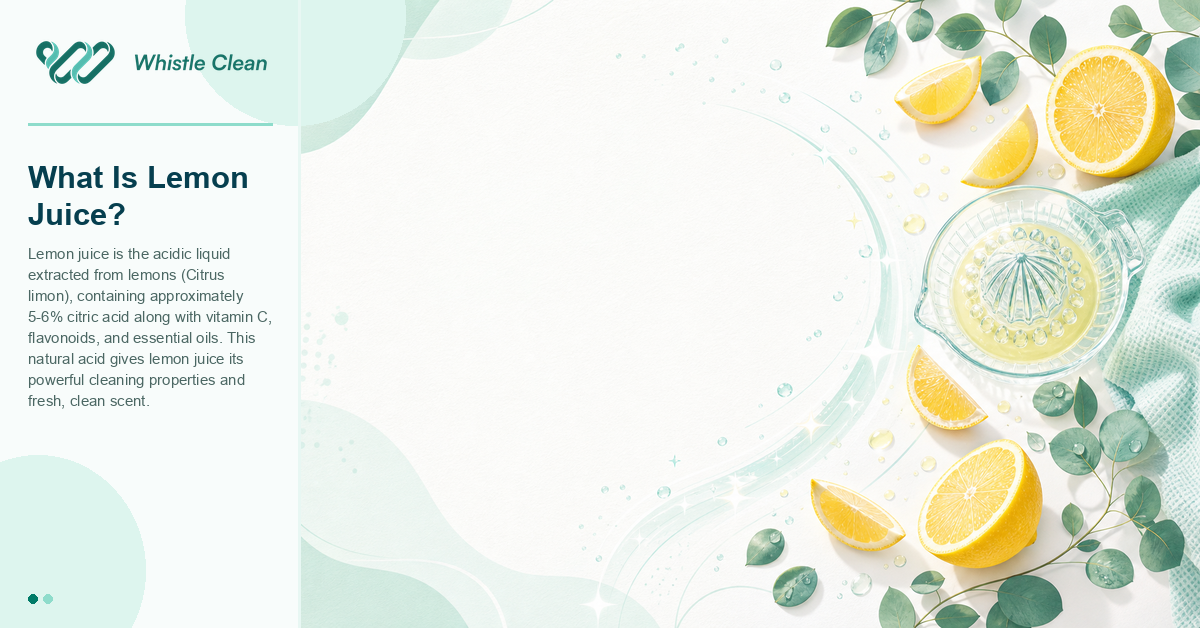
Lemon juice is the acidic liquid extracted from lemons (Citrus limon), containing approximately 5-6% citric acid along with vitamin C, flavonoids, and essential oils. This natural acid gives lemon juice its powerful cleaning properties and fresh, clean scent.
Where does Lemon Juice come from?
Lemon juice comes from lemons, citrus fruits that grow on small evergreen trees native to Asia but now cultivated worldwide in warm climates. Major lemon-producing regions include California, Italy, Spain, Turkey, and Argentina. For cleaning purposes, you can use freshly squeezed juice from store-bought lemons or purchase bottled lemon juice from grocery stores.
What does Lemon Juice look like and how is Lemon Juice generally used?
Fresh lemon juice is a pale yellow, translucent liquid with a tart, citrusy aroma. In cleaning applications, it’s typically used in several ways:
- Mixed with water in spray bottles for all-purpose cleaning
- Combined with salt or baking soda to create scrubbing pastes
- Applied directly to stains and mineral deposits
- Added to cleaning solutions for deodorizing properties
- Used as a natural bleaching agent for fabrics and surfaces
Other Names for Lemon Juice
What are Lemon Juices other names or chemical terms?
Lemon juice is known by several names in cleaning and scientific contexts:
- Citrus limon juice (botanical name)
- Lemon extract (when concentrated)
- Citric acid solution (referring to its primary active ingredient)
- Lemon liquor (in some older texts)
- Acidulated lemon juice (when preserved with citric acid)
In ingredient lists, you may see it listed as "lemon juice concentrate," "reconstituted lemon juice," or simply "citrus juice."
Are there different grades, forms, or strengths of Lemon Juice?
Yes, lemon juice comes in several forms, each with different concentrations and uses:
Fresh-squeezed lemon juice: The most potent form, containing 5-6% citric acid plus natural oils and enzymes. Best for immediate use in cleaning recipes.
Bottled lemon juice: Commercially processed and preserved, typically containing 4-5% citric acid. Convenient and shelf-stable, though slightly less potent than fresh juice.
Lemon juice concentrate: A more concentrated form requiring dilution. Contains higher acidity levels and is often used in commercial cleaning products.
Organic vs. conventional: Organic lemon juice contains no pesticide residues, making it preferable for households prioritizing natural cleaning methods.
The strength of cleaning power generally follows this order: fresh-squeezed > bottled juice > highly diluted commercial products.
Cleaning Uses
How is Lemon Juice used in home cleaning?
Lemon juice serves multiple cleaning functions throughout the home:
Degreasing: The acid breaks down oils and grease on stovetops, range hoods, and kitchen surfaces.
Descaling: Effectively removes hard water deposits, limescale, and mineral buildup from faucets, showerheads, and kettles.
Stain removal: Lightens and removes stains from cutting boards, countertops, clothing, and grout.
Deodorizing: Neutralizes odors in garbage disposals, refrigerators, microwaves, and trash cans.
Disinfecting: While not a registered disinfectant, the acidic environment inhibits some bacteria and mold growth.
Polishing: Restores shine to copper, brass, chrome fixtures, and glass surfaces.
What are the best surfaces or areas to clean with Lemon Juice?
Lemon juice works exceptionally well on:
Kitchen surfaces:
- Stainless steel sinks and appliances
- Laminate countertops
- Cutting boards (wood and plastic)
- Microwave interiors
- Dishwashers (for descaling)
- Garbage disposals
Bathroom fixtures:
- Chrome and stainless steel faucets
- Showerheads
- Glass shower doors
- Tile and grout (non-natural stone)
- Toilet bowls
Metal items:
- Copper cookware and decorations
- Brass fixtures and hardware
- Tarnished silver
Fabric and laundry:
- White clothing (as a natural bleach alternative)
- Underarm stains
- Rust stains
- Mildew spots
Other applications:
- Windows and mirrors
- Hardwood floors (highly diluted)
- Plastic containers with stains or odors
Can Lemon Juice be mixed safely with other cleaning ingredients?
Yes, lemon juice combines safely with several common household ingredients to enhance cleaning power:
Safe combinations:
Lemon juice + baking soda: Creates a fizzing paste excellent for scrubbing sinks, tubs, and tile. The alkaline baking soda and acidic lemon juice react to lift grime.
Lemon juice + salt: Forms an abrasive paste perfect for removing rust, tarnish, and stubborn stains from cutting boards and copper.
Lemon juice + olive oil: Makes an effective furniture polish for wood surfaces (test first on inconspicuous areas).
Lemon juice + water: A simple dilution for general cleaning, typically 1 part lemon juice to 2-4 parts water.
Lemon juice + dish soap: Enhances degreasing power for kitchen cleaning.
Lemon juice + essential oils: Adds additional antibacterial properties and pleasant scents.
UNSAFE combinations (never mix):
- Lemon juice + bleach: Creates toxic chlorine gas
- Lemon juice + ammonia: Can produce irritating fumes
- Lemon juice + hydrogen peroxide (in storage): While sometimes used together, this combination should only be mixed immediately before use and never stored, as it can become unstable
Safety and Storage
What should you do or avoid when using Lemon Juice?
Best practices:
- Always test on an inconspicuous area first
- Wear gloves if you have sensitive skin or cuts
- Dilute lemon juice for large surface areas
- Rinse surfaces thoroughly after cleaning
- Wipe dry to prevent water spots
- Use in well-ventilated areas
- Label all homemade cleaning solutions
- Keep cleaning solutions away from children and pets
Avoid:
- Using undiluted lemon juice on delicate surfaces
- Leaving lemon juice on surfaces for extended periods
- Applying to hot surfaces (can cause etching)
- Getting lemon juice in eyes or on broken skin
- Using on surfaces already damaged by acid
- Mixing with incompatible chemicals
Which cleaning mixtures or surfaces are unsafe?
Surfaces to avoid:
Natural stone: Marble, granite, limestone, travertine, and other natural stones are calcium-based and will etch, dull, or pit when exposed to acidic lemon juice. This damage is often permanent.
Unsealed grout: The acid can deteriorate grout over time, especially if not properly sealed.
Certain metals:
- Cast iron (removes seasoning)
- Aluminum (can cause discoloration)
- Some brass finishes (may remove protective coating)
Delicate fabrics: Silk, wool, and some synthetics may be damaged by the acid.
Finished wood: Can damage varnish, polyurethane, or wax finishes if not properly diluted.
Painted surfaces: May dull or discolor certain paints, especially if left on too long.
Electronics: The liquid and acidity can damage screens and internal components.
How should Lemon Juice be stored for freshness and safety?
Fresh lemon juice:
- Refrigerate in an airtight glass container
- Use within 2-4 days for maximum potency
- Freeze in ice cube trays for longer storage (up to 4 months)
- Label with date of extraction
Bottled lemon juice:
- Store unopened bottles in a cool, dark pantry
- Refrigerate after opening
- Use within 6 months of opening for best quality
- Check expiration dates regularly
Homemade lemon cleaning solutions:
- Store in clearly labeled spray bottles or containers
- Keep in cool, dark locations away from heat
- Use within 1-2 weeks for water-based solutions
- Refrigerate solutions containing fresh lemon juice
- Discard if you notice mold, cloudiness, or off odors
- Keep away from children and pets
Important storage tips:
- Use glass or high-quality plastic containers (lemon juice can degrade some plastics)
- Never store in metal containers (acid reacts with metal)
- Keep away from direct sunlight, which degrades vitamin C and cleaning effectiveness
- Don’t store lemon cleaning solutions near bleach or ammonia products
Why Lemon Juice Works
Why does Lemon Juice clean so well?
Lemon juice’s cleaning effectiveness comes from its unique combination of natural compounds working together:
Citric acid (5-6% concentration): This organic acid is the primary cleaning agent, lowering pH levels to break down alkaline substances like hard water deposits, soap scum, and mineral buildup.
Natural antibacterial properties: The acidic environment created by lemon juice inhibits bacterial growth, though it’s not a registered disinfectant.
D-limonene: This natural solvent found in lemon peel oil (present in fresh juice) cuts through grease and leaves a fresh scent.
Antioxidants: Compounds like vitamin C provide mild bleaching action, helping to lighten stains naturally.
Low pH: With a pH of 2-3, lemon juice effectively dissolves alkaline residues without the harshness of synthetic acids.
What chemical reaction or property makes Lemon Juice effective?
Several chemical processes make lemon juice an effective cleaner:
Acid-base reactions: When lemon juice (acidic) contacts alkaline substances like limescale, soap scum, or hard water deposits, a neutralization reaction occurs. The citric acid donates hydrogen ions (H+) that break down calcium carbonate and other alkaline compounds into soluble salts that can be wiped away.
Chelation: Citric acid acts as a chelating agent, binding to metal ions in hard water stains and rust, making them easier to remove.
Protein breakdown: The acid denatures proteins in organic stains, breaking molecular bonds and allowing stains to lift from surfaces.
Oxidation: The vitamin C (ascorbic acid) in lemon juice acts as a mild oxidizing agent, helping to bleach and lighten stains through chemical oxidation.
Emulsification: The natural surfactants in lemon juice help break down oils and grease into smaller droplets that can be rinsed away with water.
pH disruption: The low pH creates an inhospitable environment for many bacteria and molds, which prefer neutral to slightly alkaline conditions.
These reactions occur without producing toxic fumes or leaving harmful residues, making lemon juice a safer alternative to many commercial cleaners for appropriate applications.
DIY Cleaning Recipes
What easy homemade cleaner recipes use Lemon Juice?
All-Purpose Cleaner
- 1/4 cup lemon juice
- 2 cups water
- 1 teaspoon dish soap
- 10 drops essential oil (optional)
Mix in a spray bottle. Use on countertops, appliances, and most hard surfaces. Shake before each use.
Heavy-Duty Scrubbing Paste
- 1/2 cup baking soda
- 1/4 cup lemon juice
- 1 tablespoon salt (optional for extra abrasion)
Combine to form a paste. Apply to sinks, tubs, or tile, scrub, and rinse thoroughly. Use immediately as the mixture loses effectiveness quickly.
Glass and Mirror Cleaner
- 2 tablespoons lemon juice
- 2 cups water
- 1/4 cup rubbing alcohol
Mix in a spray bottle. Spray on glass surfaces and wipe with a microfiber cloth for streak-free shine.
Furniture Polish
- 1/4 cup lemon juice
- 1/2 cup olive oil
- 10 drops lemon essential oil (optional)
Shake well before use. Apply small amount to soft cloth and buff wood furniture. Test on hidden area first.
Microwave Cleaner
- 1/2 cup water
- 3 tablespoons lemon juice
- Lemon slices (optional)
Combine in microwave-safe bowl. Microwave for 3-5 minutes until boiling. Let sit 5 minutes, then wipe interior with cloth.
Garbage Disposal Refresher
- Lemon halves (after juicing)
- 1 cup ice cubes
- 1/2 cup salt
Run disposal with cold water, add ice and salt, then lemon halves. Cleans and deodorizes simultaneously.
Toilet Bowl Cleaner
- 1 cup lemon juice
- 1/2 cup borax
Pour lemon juice around bowl, sprinkle borax, let sit 30 minutes, scrub, and flush.
Laundry Brightener
- 1/2 cup lemon juice
- Add to rinse cycle
Natural alternative to bleach for white fabrics. Test on colored fabrics first.
What are the best ingredient combinations for Lemon Juice?
For cutting grease: Lemon juice + dish soap + warm water
The combination of acid and surfactants tackles kitchen grease effectively.
For scrubbing power: Lemon juice + baking soda + salt
Creates a mildly abrasive, foaming paste that lifts stuck-on grime without scratching most surfaces.
For disinfecting: Lemon juice + vinegar (mixed immediately before use)
Doubles the acidic cleaning power. Never store this combination.
For polishing metal: Lemon juice + salt
The acid removes tarnish while salt provides gentle abrasion.
For wood care: Lemon juice + olive oil (or jojoba oil)
Cleans and conditions wood furniture in one step.
For fabric stains: Lemon juice + sunlight
The combination of citric acid and UV light naturally bleaches stains.
For descaling: Lemon juice + water (1:1 ratio)
Perfect for coffee makers, kettles, and showerheads.
For deodorizing: Lemon juice + baking soda + essential oils
Neutralizes odors through acid-base reaction plus pleasant fragrance.
Common Problems and Solutions
What common problems can occur when cleaning with Lemon Juice?
Problem 1: Surface etching or dulling
Lemon juice left too long on natural stone, marble, or certain metals can cause permanent etching, creating dull spots or rough patches.
Problem 2: Discoloration
Some surfaces, particularly certain fabrics, unsealed wood, or colored grout, may lighten or develop spots when exposed to lemon juice.
Problem 3: Sticky residue
When lemon juice isn’t rinsed thoroughly or is used in high concentrations, it can leave a sticky film that attracts dirt.
Problem 4: Skin irritation
Repeated exposure to undiluted lemon juice can cause skin dryness, irritation, or photosensitivity (increased sensitivity to sunlight).
Problem 5: Ineffective cleaning
Lemon juice may not work well on heavy grease, certain types of stains, or when cleaning solutions are too diluted.
Problem 6: Unpleasant smell
Old or improperly stored lemon cleaning solutions can develop off-odors or mold.
Problem 7: Rust on metal
Extended contact between lemon juice and certain metals can lead to corrosion or rust.
How can these issues be prevented or solved?
Preventing and fixing etching:
- Always test on inconspicuous areas first
- Never use lemon juice on natural stone, marble, or limestone
- Dilute lemon juice appropriately for the surface
- Limit contact time to 5-10 minutes maximum
- Rinse thoroughly with clean water
- If etching occurs, professional stone restoration may be needed for natural stone; for other surfaces, re-polishing may help
Avoiding discoloration:
- Test colored fabrics in hidden areas before treating stains
- Dilute lemon juice for use on wood (1:4 ratio with water)
- Don’t leave lemon juice on colored surfaces for extended periods
- Rinse immediately if discoloration begins to appear
- For fabrics, treat discoloration by washing with regular detergent immediately
Eliminating sticky residue:
- Always rinse surfaces with clean water after using lemon juice
- Use appropriate dilution ratios (typically 1 part lemon juice to 2-4 parts water)
- Wipe dry with a clean cloth after rinsing
- If residue remains, clean again with plain water or a mild soap solution
Protecting skin:
- Wear rubber or nitrile gloves when using lemon juice for cleaning
- Avoid using lemon juice if you have cuts or broken skin
- Wash hands thoroughly after cleaning
- Apply hand lotion to prevent dryness
- Limit direct sun exposure after handling lemon juice (can cause phototoxic reactions)
Improving cleaning effectiveness:
- Use fresh lemon juice when possible for maximum potency
- Increase concentration for tough jobs (up to 1:1 with water)
- Allow lemon juice to sit on stains for several minutes before scrubbing
- Combine with appropriate boosters (baking soda for scrubbing, salt for abrasion)
- Use warm lemon solutions for better grease-cutting power
- For heavy grease or disinfection needs, consider commercial cleaners designed for those purposes
Maintaining fresh solutions:
- Make small batches of cleaning solutions
- Store in refrigerator if using fresh lemon juice
- Use within 1-2 weeks
- Label with preparation date
- Discard if odor changes or mold appears
- Consider using bottled lemon juice for longer shelf life
Preventing metal corrosion:
- Don’t leave lemon juice on metal surfaces for more than 10 minutes
- Rinse metal thoroughly after cleaning
- Dry immediately to prevent water spots and oxidation
- Avoid using on cast iron or unsealed aluminum
- For copper and brass, apply a thin coat of oil after cleaning to protect finish
Environmental and Health Considerations
Is Lemon Juice safe for health and the environment?
Health safety:
Lemon juice is generally very safe for home cleaning use:
Low toxicity: Unlike many commercial cleaners, lemon juice is non-toxic if accidentally ingested in small amounts (though it shouldn’t be consumed from cleaning bottles due to possible contamination).
Minimal respiratory irritation: Produces no harsh fumes, making it safe for people with asthma or respiratory sensitivities.
Biodegradable: Citric acid breaks down naturally and completely in the environment.
Allergen considerations: While rare, some individuals may have citrus allergies or sensitivities. Those with citrus allergies should avoid direct contact.
Skin safety: Generally safe, though undiluted lemon juice can cause dryness or irritation with prolonged exposure. The photosensitizing compounds in lemon juice can increase sun sensitivity temporarily.
Pet safety: Much safer than chemical cleaners around pets, though surfaces should still be rinsed to prevent pets from ingesting concentrated lemon juice, which can cause stomach upset.
Environmental impact:
Lemon juice is one of the most environmentally friendly cleaning options:
Renewable resource: Lemons are a renewable agricultural product with relatively low environmental impact.
No harmful runoff: When rinsed down drains, lemon juice doesn’t contribute to water pollution or harm aquatic ecosystems.
Biodegradable: Breaks down completely within days, unlike synthetic chemicals that persist in the environment.
No toxic manufacturing: Production doesn’t create hazardous waste or require harsh chemical processes.
Reduced plastic waste: Making your own lemon cleaning solutions reduces plastic bottle waste from commercial cleaners.
Sustainable packaging options: Fresh lemons and glass-bottled lemon juice offer plastic-free alternatives.
Limitations to consider:
Not a registered disinfectant: While lemon juice has antibacterial properties, it’s not EPA-registered as a disinfectant and shouldn’t be relied upon for sanitizing surfaces where true disinfection is needed (like after handling raw meat).
Water usage: Requires thorough rinsing, which uses water.
Agricultural impact: Commercial lemon production requires water, pesticides (unless organic), and transportation, though impact is still lower than chemical cleaner production.
Overall assessment: Lemon juice is an excellent eco-friendly cleaning choice for most household applications, significantly reducing chemical exposure and environmental impact compared to conventional cleaners.
Lemon Juice FAQs
Can Lemon Juice be mixed with vinegar or hydrogen peroxide?
Lemon juice and vinegar:
Yes, these can be mixed safely and are sometimes combined for enhanced cleaning power. Both are acids (lemon juice contains citric acid; vinegar contains acetic acid) that work similarly to break down mineral deposits, cut grease, and remove stains.
Benefits of combining:
- Increased acidity for tough limescale and soap scum
- Enhanced deodorizing properties
- Cost-effective cleaning solution
How to mix: Combine equal parts lemon juice and white vinegar, or use 1/4 cup of each in 2 cups of water for general cleaning.
Caution: The combination is quite acidic, so use appropriate dilution, test on surfaces first, and never use on natural stone, marble, or other acid-sensitive materials.
Lemon juice and hydrogen peroxide:
This combination requires caution. While sometimes recommended for stain removal and mold treatment, there are important considerations:
Safety concerns:
- This mixture creates peracetic acid, which is more corrosive than either ingredient alone
- The solution becomes unstable over time
- Should only be mixed immediately before use
- Never store this combination
If you choose to use this combination:
- Mix only what you’ll use immediately
- Use in well-ventilated areas
- Wear gloves
- Test on inconspicuous areas first
- Rinse surfaces thoroughly
- Keep away from skin and eyes
Better alternative: Use lemon juice and hydrogen peroxide separately rather than mixed together. Apply hydrogen peroxide first, let it work, rinse, then apply lemon juice if needed.
Recommendation: For most household cleaning, lemon juice alone or combined with baking soda, salt, or dish soap provides excellent results without the safety concerns of the hydrogen peroxide combination.
Is Lemon Juice safe for marble, stone, or wood surfaces?
Marble and natural stone – NOT SAFE:
Never use lemon juice on marble, granite, limestone, travertine, or other natural stone surfaces. Here’s why:
Chemical reaction: These stones are calcium-based (calcium carbonate). The citric acid in lemon juice reacts with calcium carbonate, causing etching-permanent dull spots, rough patches, or pitting.
Damage signs:
- Dull spots where the shine has disappeared
- Rough texture
- Light-colored marks or rings
- Surface pitting
This damage is permanent and can only be repaired through professional stone restoration, which involves grinding and re-polishing.
Safe alternatives for stone:
- pH-neutral stone cleaners
- Mild dish soap and water
- Commercial stone-specific products
Sealed vs. unsealed stone: Even if stone is sealed, the sealer only protects against staining, not acid etching. Lemon juice will still damage sealed stone.
Wood surfaces – USE WITH EXTREME CAUTION:
The answer depends on the type of wood and finish:
Finished/sealed wood (polyurethane, varnish, lacquer):
- Highly diluted lemon juice (1 part lemon juice to 4 parts water) may be safe for occasional use
- Always test in an inconspicuous area first
- Wipe dry immediately-never leave standing liquid
- Risk: Can dull or damage finish over time with repeated use
- Better option: Use wood-specific cleaners
Unfinished/raw wood:
- NOT recommended-acid can discolor and damage wood fibers
- Can raise the grain and create rough spots
- May cause uneven coloring
Oiled wood:
- Diluted lemon juice can strip oil finish
- If used, must re-oil after cleaning
Safe wood cleaning with lemon:
If you choose to use lemon juice on finished wood:
- Dilute heavily (1 tablespoon lemon juice per cup of water)
- Mix with olive oil for wood polish (1/4 cup lemon juice to 1/2 cup oil)
- Test first on hidden area
- Apply with slightly damp (not wet) cloth
- Dry immediately and thoroughly
- Use sparingly-no more than monthly
- Watch for any dulling or damage
Best practice: For marble, stone, and wood, skip the lemon juice and use cleaners specifically formulated for these materials. The risk of damage outweighs the benefits of natural cleaning in these cases.
Does Lemon Juice clean, disinfect, or both?
Short answer: Lemon juice primarily cleans and has some antibacterial properties, but it does not truly disinfect in the way EPA-registered disinfectants do.
Cleaning properties (what lemon juice DOES do):
Lemon juice is an effective cleaner that:
- Removes dirt, grime, and grease through acid action and natural solvents
- Breaks down mineral deposits and limescale
- Cuts through soap scum
- Lifts stains through mild bleaching action
- Deodorizes by neutralizing odors chemically
- Removes tarnish from metals
- Cleans glass and mirrors
Antibacterial properties (limited disinfection):
Lemon juice does have some antimicrobial effects:
- The acidic environment (pH 2-3) inhibits growth of some bacteria
- Studies show effectiveness against some common bacteria like E. coli and Salmonella in laboratory settings
- The low pH disrupts bacterial cell membranes
- Natural compounds like limonene have mild antimicrobial properties
However, lemon juice is NOT a disinfectant because:
- It’s not EPA-registered as a disinfectant
- It doesn’t kill 99.9% of bacteria and viruses as required for disinfectant classification
- Effectiveness varies greatly depending on concentration, contact time, and bacterial type
- It’s not effective against many viruses, including cold and flu viruses
- It doesn’t kill bacterial spores or all pathogenic organisms
- Scientific testing for disinfection efficacy hasn’t been completed to EPA standards
When lemon juice’s antibacterial properties are sufficient:
- General household cleaning where true disinfection isn’t critical
- Deodorizing cutting boards between deep sanitizing
- Cleaning surfaces not exposed to raw meat or bodily fluids
- Freshening garbage disposals
- Routine bathroom cleaning in healthy households
When true disinfection is needed:
Use EPA-registered disinfectants or proven sanitizing methods for:
- Surfaces that contacted raw meat, poultry, or seafood
- Bathroom surfaces in shared or public spaces
- Cleaning up after illness
- Diaper changing areas
- Pet accident cleanup
- Any situation requiring pathogen elimination
Proven disinfection alternatives:
- EPA-registered disinfectants (follow label directions)
- Bleach solution (1/3 cup bleach per gallon of water)
- 70% isopropyl alcohol
- Hydrogen peroxide (3% solution)
- Steam cleaning (for appropriate surfaces)
The verdict: Use lemon juice for its excellent cleaning properties and fresh scent, but don’t rely on it when true disinfection is necessary. For most everyday cleaning, its antibacterial properties provide adequate protection, but supplement with proper disinfectants when dealing with potentially hazardous contamination.
Conclusion
Lemon juice is a versatile, eco-friendly cleaning agent that effectively tackles many household cleaning challenges through its natural acidity and antibacterial properties. From removing hard water stains and deodorizing surfaces to polishing metals and lifting stains, lemon juice offers a safer alternative to many chemical cleaners for appropriate applications.
However, success with lemon juice cleaning requires understanding its limitations: avoid using it on natural stone, marble, and unsealed wood; recognize that it cleans but doesn’t truly disinfect; and always test on inconspicuous areas first. When used correctly and combined with complementary ingredients like baking soda, salt, or dish soap, lemon juice becomes a powerful tool in your natural cleaning arsenal.
By following the recipes, safety guidelines, and best practices outlined in this guide, you can harness the cleaning power of lemon juice while protecting your surfaces, your health, and the environment. Whether you’re looking to reduce chemical exposure, save money, or simply enjoy the fresh scent of citrus in your home, lemon juice cleaning offers a time-tested, effective solution for everyday household needs.