Rubbing alcohol for cleaning is a versatile solution primarily composed of either isopropyl alcohol or ethyl alcohol, with concentrations typically ranging from 70% to 90%. This substance is prized for its efficacy in disinfecting and sterilizing surfaces, removing stains, and dissolving oils and other greasy residues. Due to its rapid evaporation rate, it leaves behind no trace, making it ideal for cleaning electronics and optical devices without damaging moisture accumulation.
Related ingredients: the natural cleaning guides, hydrogen peroxide, and lemon juice.
In the realm of sanitation, rubbing alcohol’s antiseptic properties make it a popular choice in healthcare settings for sterilizing instruments and skin areas before injections or minor procedures. Its effectiveness against bacteria, viruses, and fungi is due to its ability to denature proteins, an essential mechanism in microbial life processes that leads to cell lysis. In household environments, it is commonly employed for cleaning glass, mirrors, and stainless steel, providing a streak-free finish. The solution’s ability to evaporate quickly also prevents the growth of mold and mildew by drying surfaces swiftly.
Rubbing alcohol’s application extends beyond cleaning; it is also used in personal care products such as hand sanitizers and aftershave lotions, where it functions both as a cleaner and a cooling agent. Its utility in various sectors underscores its importance as a multi-functional cleaning agent.
Rubbing alcohol is one of the most versatile and effective cleaning agents available in any household. This comprehensive guide will help you understand how to use rubbing alcohol safely and effectively for all your cleaning needs.
What Is Rubbing Alcohol?
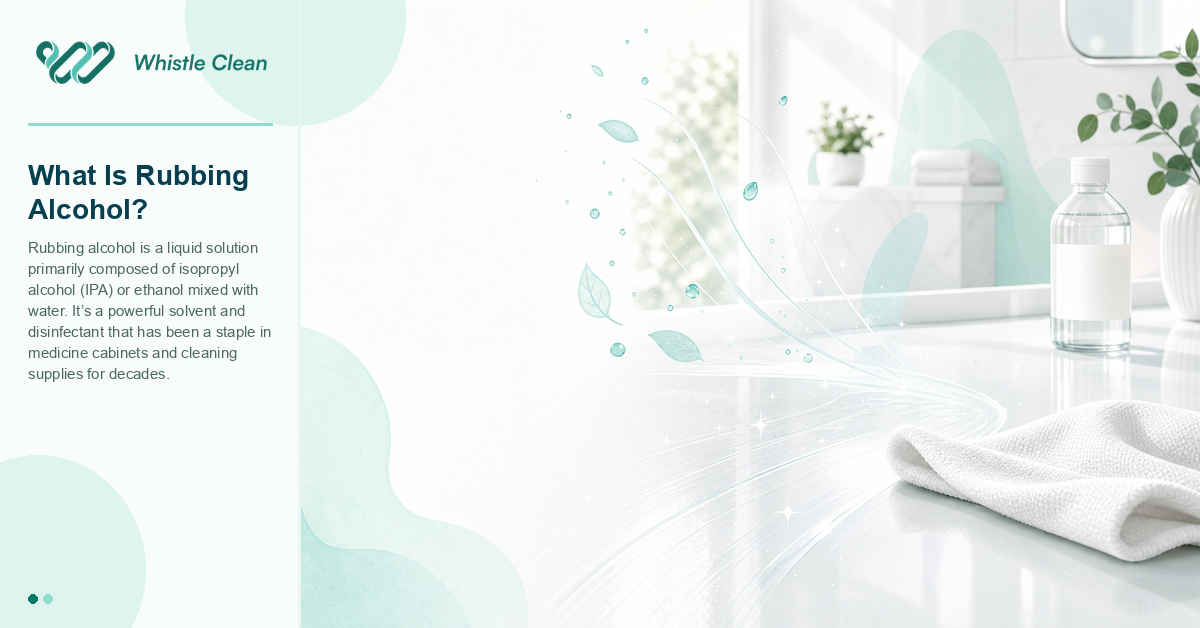
Rubbing alcohol is a liquid solution primarily composed of isopropyl alcohol (IPA) or ethanol mixed with water. It’s a powerful solvent and disinfectant that has been a staple in medicine cabinets and cleaning supplies for decades.
Where does Rubbing Alcohol come from?
Rubbing alcohol is manufactured through industrial processes. Isopropyl alcohol, the most common type, is produced by combining water and propene (a petroleum derivative) through a hydration reaction. Ethanol-based rubbing alcohol is created through the fermentation of sugars or petrochemical processes. The alcohol is then diluted with water and may contain additives like denaturing agents to make it unfit for consumption.
What does Rubbing Alcohol look like and how is Rubbing Alcohol generally used?
Rubbing alcohol is a clear, colorless liquid with a strong, distinctive smell. It typically comes in plastic or glass bottles ranging from 8 ounces to 32 ounces. The liquid has a thin, watery consistency similar to water but evaporates much more quickly.
In cleaning applications, rubbing alcohol is used as:
- A surface disinfectant for countertops and electronics
- A glass and mirror cleaner
- A degreaser for sticky residues
- A sanitizer for high-touch surfaces
- A spot remover for certain stains
Other Names for Rubbing Alcohol
What are Rubbing Alcohol’s other names or chemical terms?
Rubbing alcohol goes by several names depending on its composition and use:
- Isopropyl alcohol (IPA) – the most common type
- Isopropanol – the chemical name for isopropyl alcohol
- 2-propanol – another chemical designation
- Surgical spirit – common term in the UK
- Ethyl rubbing alcohol – when made with ethanol instead of isopropyl alcohol
Are there different grades, forms, or strengths of Rubbing Alcohol?
Yes, rubbing alcohol comes in several concentrations:
70% Isopropyl Alcohol – The most common household strength, ideal for disinfection. The water content actually makes it more effective at killing bacteria and viruses because it slows evaporation, allowing more contact time.
91% Isopropyl Alcohol – A stronger concentration that evaporates faster, making it excellent for electronics cleaning and situations where you want minimal moisture.
99% Isopropyl Alcohol – The highest purity available for consumer use, primarily used for specialized applications like electronics repair and laboratory work.
50-60% Solutions – Less common but sometimes available, these are less effective for disinfection but can be suitable for certain cleaning tasks.
Cleaning Uses
How is Rubbing Alcohol used in home cleaning?
Rubbing alcohol serves multiple cleaning purposes throughout your home:
Disinfecting – Spray or wipe 70% rubbing alcohol on surfaces to kill bacteria, viruses, and fungi. Allow it to sit for at least 30 seconds before wiping.
Electronics cleaning – Use 91% or higher on a microfiber cloth to clean phones, keyboards, remotes, and screens without leaving moisture damage.
Glass cleaning – Mix with water for streak-free windows and mirrors.
Deodorizing – Spray on fabric surfaces to eliminate odors without washing.
Stain removal – Dab on ink stains, grass stains, or adhesive residue before laundering.
Degreasing – Remove sticky residue from labels, tape, and cooking grease.
What are the best surfaces or areas to clean with Rubbing Alcohol?
Rubbing alcohol excels on these surfaces:
Glass and mirrors – Leaves a streak-free shine without harsh chemicals.
Stainless steel – Removes fingerprints and adds shine to appliances and fixtures.
Electronics – Safe for screens, keyboards, mice, game controllers, and phone cases when used properly.
Bathroom fixtures – Disinfects faucets, toilet handles, and light switches.
Kitchen countertops – Effective on laminate, sealed granite, and quartz (avoid marble and unsealed stone).
Tile and grout – Cuts through soap scum and mildew.
Jewelry – Cleans diamonds and hard gemstones (avoid pearls and porous stones).
Can Rubbing Alcohol be mixed safely with other cleaning ingredients?
Rubbing alcohol can be safely combined with certain ingredients:
Safe combinations:
- Water – The most common dilution for general cleaning
- Dish soap – A few drops create an effective all-purpose cleaner
- Essential oils – Add pleasant scents and additional antimicrobial properties
- Castile soap – Creates a gentle yet effective cleaning solution
Use separately (not mixed together):
- Vinegar – Both are effective cleaners but mixing them reduces the effectiveness of the alcohol
- Hydrogen peroxide – Can be used in sequence but shouldn’t be mixed in the same bottle
- Ammonia – No dangerous reaction, but there’s no benefit to combining them
Safety and Storage
What should you do or avoid when using Rubbing Alcohol?
DO:
- Use in well-ventilated areas to avoid inhaling concentrated fumes
- Wear gloves if you have sensitive skin or are cleaning extensively
- Test on inconspicuous areas before using on delicate surfaces
- Allow surfaces to air dry completely for maximum disinfection
- Keep away from children and pets
- Use appropriate concentrations for your task
AVOID:
- Using near open flames or heat sources (rubbing alcohol is highly flammable)
- Applying to hot surfaces
- Ingesting or getting in eyes
- Using on acrylic, plastic surfaces that may crack or cloud
- Overusing on wood furniture (can damage finishes)
- Mixing with bleach (creates harmful chloroform gas)
Which cleaning mixtures or surfaces are unsafe?
Never mix rubbing alcohol with:
- Bleach – Creates toxic chloroform and hydrochloric acid vapors that can cause serious respiratory damage
- Chlorine-based cleaners – Similar dangerous reaction as bleach
Avoid using rubbing alcohol on:
- Unsealed wood – Can dry out and damage the wood
- Painted surfaces – May strip or dull paint finishes
- Acrylic or plastic – Can cause clouding, cracking, or discoloration
- Leather – Dries out natural oils, causing cracking
- Silk or acetate fabrics – Can cause permanent damage or discoloration
- Marble, granite, or natural stone – Especially if unsealed, can etch or dull the surface
How should Rubbing Alcohol be stored for freshness and safety?
Proper storage ensures safety and maintains effectiveness:
Storage guidelines:
- Keep in original container with a tight-fitting lid to prevent evaporation
- Store in a cool, dry place away from heat sources and direct sunlight
- Keep in a locked cabinet away from children and pets
- Store away from the kitchen or any area with open flames
- Maintain temperature between 59-86°F (15-30°C)
- Keep away from oxidizing agents and strong acids
- Check expiration dates (typically 2-3 years unopened)
Signs your rubbing alcohol has degraded:
- Concentration has decreased due to evaporation (bottle feels lighter)
- Passed expiration date
- Exposed to extreme temperatures
- Contaminated with debris or other substances
Why Rubbing Alcohol Works
Why does Rubbing Alcohol clean so well?
Rubbing alcohol is an exceptional cleaner due to several properties:
Solvent power – As an alcohol, it dissolves oils, grease, and many organic compounds that water alone cannot remove. This makes it effective against adhesives, ink, and body oils.
Rapid evaporation – Unlike water, rubbing alcohol evaporates quickly, leaving no residue or water spots. This is why it’s ideal for glass and electronics.
Antimicrobial action – It denatures proteins in bacteria, viruses, and fungi, effectively killing them on contact.
Low surface tension – Allows it to spread easily and penetrate into small crevices and porous surfaces.
What chemical reaction or property makes Rubbing Alcohol effective?
The cleaning and disinfecting power of rubbing alcohol comes from its molecular structure and behavior:
Disinfection mechanism:
Isopropyl alcohol disrupts the cell membranes of microorganisms through protein denaturation. The alcohol molecules penetrate the cell wall and coagulate the proteins, essentially destroying the organism’s structure. The 70% concentration is most effective because water slows evaporation, allowing 10-15 minutes of contact time needed for thorough disinfection.
Cleaning mechanism:
The alcohol molecule has both hydrophilic (water-loving) and lipophilic (fat-loving) properties, making it amphipathic. This allows it to dissolve both water-soluble and oil-soluble substances. The hydroxyl group (-OH) interacts with water and polar compounds, while the carbon chain interacts with oils and non-polar compounds.
Evaporation property:
The weak hydrogen bonding in isopropyl alcohol means molecules escape to vapor form easily at room temperature, which is why it dries so quickly without leaving residue.
DIY Cleaning Recipes
What easy homemade cleaner recipes use Rubbing Alcohol?
All-Purpose Disinfecting Spray
- 1 cup 70% rubbing alcohol
- 1 cup water
- 10-15 drops essential oil (tea tree, lavender, or lemon)
- Mix in spray bottle; use on countertops, doorknobs, and bathroom surfaces
Streak-Free Glass Cleaner
- 1 cup rubbing alcohol (70% or 91%)
- 1 cup water
- 1 tablespoon white vinegar (optional)
- Spray and wipe with microfiber cloth for crystal-clear windows and mirrors
Electronics Cleaning Solution
- 1 part 91% rubbing alcohol
- 1 part distilled water
- Apply to microfiber cloth (never spray directly) to clean screens and devices
Bathroom Mold and Mildew Spray
- 2 cups rubbing alcohol
- 1 cup water
- 1 teaspoon dish soap
- 10 drops tea tree oil
- Spray on affected areas, let sit 10 minutes, then scrub and rinse
Stainless Steel Polish
- 1 cup rubbing alcohol
- 2-3 drops dish soap
- Spray on stainless steel, wipe with grain, buff dry for a brilliant shine
What are the best ingredient combinations for Rubbing Alcohol?
For disinfection power:
- Rubbing alcohol + tea tree oil + water
- Rubbing alcohol + eucalyptus oil + water
For cutting grease:
- Rubbing alcohol + dish soap + water
- Rubbing alcohol + castile soap + water
For pleasant scent:
- Rubbing alcohol + lavender essential oil + water
- Rubbing alcohol + lemon essential oil + water
For glass cleaning:
- Rubbing alcohol + water + cornstarch (prevents streaking)
- Rubbing alcohol + water + white vinegar
For heavy-duty cleaning:
- Rubbing alcohol + baking soda (make a paste for scrubbing)
- Rubbing alcohol + dish soap + baking soda
Common Problems and Solutions
What common problems can occur when cleaning with Rubbing Alcohol?
Problem 1: Surface discoloration or damage
This occurs when rubbing alcohol is used on incompatible surfaces like certain plastics, finished wood, or fabrics. The alcohol can strip finishes, cause clouding, or fade colors.
Problem 2: Strong fumes causing headaches or dizziness
Concentrated vapors in poorly ventilated spaces can cause respiratory irritation and discomfort.
Problem 3: Ineffective disinfection
Using too low a concentration, wiping away too quickly, or using expired product reduces antimicrobial effectiveness.
Problem 4: Dried out or sticky residue
While rare, this can happen if rubbing alcohol contains additives or if the surface has a coating that reacts with alcohol.
Problem 5: Skin irritation or dryness
Repeated exposure without gloves can strip natural oils from skin, causing dryness, cracking, or irritation.
How can these issues be prevented or solved?
Preventing surface damage:
- Always test on a small, hidden area first
- Use lower concentrations (70%) on sensitive surfaces
- Avoid prolonged contact on finished wood or painted surfaces
- Research material compatibility before cleaning
Reducing fume exposure:
- Open windows and doors when using rubbing alcohol
- Use fans to increase air circulation
- Take breaks during extended cleaning sessions
- Consider wearing a mask if you’re sensitive
- Use spray bottles instead of pouring to minimize vapor release
Ensuring effective disinfection:
- Use 70% concentration for disinfection (not higher)
- Allow 30 seconds to several minutes of contact time
- Don’t wipe away immediately-let it air dry
- Check expiration dates and storage conditions
- Pre-clean surfaces to remove visible dirt
Avoiding residue:
- Use pure rubbing alcohol without additives
- Buff surfaces with a clean, dry cloth after cleaning
- Ensure the surface is compatible with alcohol
- Use appropriate dilution ratios
Protecting your skin:
- Wear rubber or nitrile gloves during extended use
- Wash hands thoroughly after use
- Apply moisturizer to prevent dryness
- Avoid contact with eyes and mucous membranes
Environmental and Health Considerations
Is Rubbing Alcohol safe for health and the environment?
Health safety:
Rubbing alcohol is generally safe when used properly for cleaning:
Advantages:
- Low toxicity compared to many commercial cleaners
- No carcinogenic properties identified at normal exposure levels
- Breaks down quickly, leaving no harmful residue
- Doesn’t produce toxic fumes when used alone (never mix with bleach)
- Safer alternative to harsh chemical disinfectants
Precautions:
- Flammable-keep away from heat and flames
- Can cause irritation with prolonged skin contact
- Fumes can cause headaches in poorly ventilated areas
- Toxic if ingested-store securely away from children
- Eye contact causes severe irritation
Environmental impact:
Rubbing alcohol is relatively eco-friendly:
Positive aspects:
- Biodegradable-breaks down naturally in the environment
- Doesn’t bioaccumulate in organisms or ecosystems
- Low aquatic toxicity when diluted
- Evaporates quickly, reducing environmental persistence
- No ozone-depleting compounds
- Minimal packaging waste compared to many commercial cleaners
Considerations:
- Production from petroleum derivatives has environmental costs
- Volatile organic compound (VOC) that contributes to air pollution when used in large quantities
- Flammability requires careful disposal
Responsible use:
- Use only the amount needed
- Ensure proper ventilation to minimize indoor air quality impact
- Dispose of according to local regulations (usually down the drain with plenty of water)
- Consider concentration-higher isn’t always better or more eco-friendly
- Reuse spray bottles rather than buying new products
Rubbing Alcohol FAQs
Can Rubbing Alcohol be mixed with vinegar or hydrogen peroxide?
Rubbing alcohol and vinegar:
These should NOT be mixed together in the same solution. While not dangerous like bleach combinations, mixing them reduces the effectiveness of both cleaners. The acidic vinegar can lower the pH, making the alcohol less effective as a disinfectant. However, you can use them sequentially-clean with one, let it dry, then use the other.
Best practice: Use rubbing alcohol for disinfection and quick-drying applications, and use vinegar separately for descaling and cutting through mineral deposits.
Rubbing alcohol and hydrogen peroxide:
These should also NOT be mixed together in the same container. While both are effective disinfectants individually, combining them creates peracetic acid, which can be corrosive and irritating to skin, eyes, and respiratory system.
Best practice: Use them separately or in sequence. For enhanced disinfection, apply one, let it work and dry, then apply the other. Many hospitals use this sequential approach for maximum antimicrobial effect.
Is Rubbing Alcohol safe for marble, stone, or wood surfaces?
Marble and natural stone:
Rubbing alcohol should be avoided on marble and other calcium-based stones. While it won’t etch as severely as acidic cleaners, repeated use can:
- Dull the polish over time
- Dry out the stone
- Potentially damage sealants
- Cause discoloration on some varieties
Safe alternative: Use pH-neutral stone cleaners or simply warm water with a tiny amount of dish soap.
Granite and quartz:
- Sealed granite: Generally safe for occasional use with 70% rubbing alcohol, but don’t use daily as it can degrade the sealant over time
- Quartz: More resistant and can tolerate rubbing alcohol better than natural stone, but still use sparingly
- Best practice: Stick to manufacturer-recommended cleaners for longevity
Wood surfaces:
Rubbing alcohol can damage wood depending on the finish:
- Finished/sealed wood: Occasional use is okay, but repeated applications can dull or strip finishes, especially shellac and lacquer
- Unfinished wood: Avoid entirely-will dry out and potentially stain the wood
- Wood furniture: Test in hidden areas; may cloud or damage the finish
Safe alternative: Use wood-specific cleaners or a damp cloth with mild soap for regular cleaning.
Does Rubbing Alcohol clean, disinfect, or both?
Rubbing alcohol does both cleaning and disinfecting, but its effectiveness depends on concentration and application:
As a cleaner:
- Dissolves oils, grease, adhesives, and many organic compounds
- Removes fingerprints, smudges, and light soil
- Evaporates quickly without residue
- Works well on glass, mirrors, and electronics
- Limitation: Not effective on heavy dirt or mineral deposits-pre-clean dirty surfaces first
As a disinfectant:
- 70% concentration is most effective for disinfection
- Kills 99.9% of common bacteria and viruses (including E. coli, Salmonella, Staph, and many cold/flu viruses)
- Effective against some fungi
- Requires 30 seconds to several minutes of contact time
- Limitation: Not effective against all pathogens (notably bacterial spores like C. difficile and some non-enveloped viruses)
For maximum effectiveness:
- Clean first – Remove visible dirt and debris
- Disinfect second – Apply 70% rubbing alcohol and allow proper contact time
- Let air dry – Don’t wipe away immediately
Important distinction: The EPA does not register rubbing alcohol as a disinfectant for all pathogens, so for healthcare settings or situations requiring complete sterilization, use EPA-registered disinfectants. For everyday home use, rubbing alcohol provides excellent cleaning and disinfection for most common germs.
Conclusion
Rubbing alcohol is an invaluable cleaning tool that offers powerful disinfection, effective cleaning, and versatility throughout your home. When used properly with attention to safety guidelines and surface compatibility, it provides an affordable and relatively eco-friendly alternative to many commercial cleaners. Whether you’re disinfecting high-touch surfaces, cleaning electronics, removing stubborn stains, or creating DIY cleaning solutions, rubbing alcohol deserves a permanent place in your cleaning arsenal.
Remember to always use appropriate concentrations for your task, ensure proper ventilation, store safely, and test on inconspicuous areas when trying new applications. With this comprehensive knowledge, you can confidently harness the cleaning power of rubbing alcohol while protecting your health, your surfaces, and the environment.