
Borax for cleaning is an inorganic compound known scientifically as sodium tetraborate decahydrate. Commonly sourced from evaporite deposits produced by the repeated evaporation of seasonal lakes, borax exhibits properties that make it a versatile cleaning agent. It functions as a water softener, mild alkali, and has antifungal and antiviral qualities.
Related ingredients: our natural cleaning guide library, washing soda, and hydrogen peroxide.
Used historically since ancient times, borax gained commercial popularity in the late 19th century for its efficacy in cleaning and preserving household and industrial items. In modern applications, it is integrated into formulations for laundry detergents, multi-purpose cleaners, and is utilized in DIY cleaning recipes to enhance stain removal and disinfection. Borax interacts chemically with water to create a pH buffer that increases the effectiveness of surfactants in detergents. Its gentle abrasiveness allows for effective surface scrubbing without damaging surfaces. Safety in handling borax involves avoiding ingestion and prolonged skin contact, as it can cause irritation and other health issues with excessive exposure.
Borax has been a trusted household cleaning staple for over a century, but many people remain unsure about what it is, how to use it safely, and whether it lives up to its reputation. This comprehensive guide answers all your questions about cleaning with borax, helping you make informed decisions for your home.
What Is Borax?
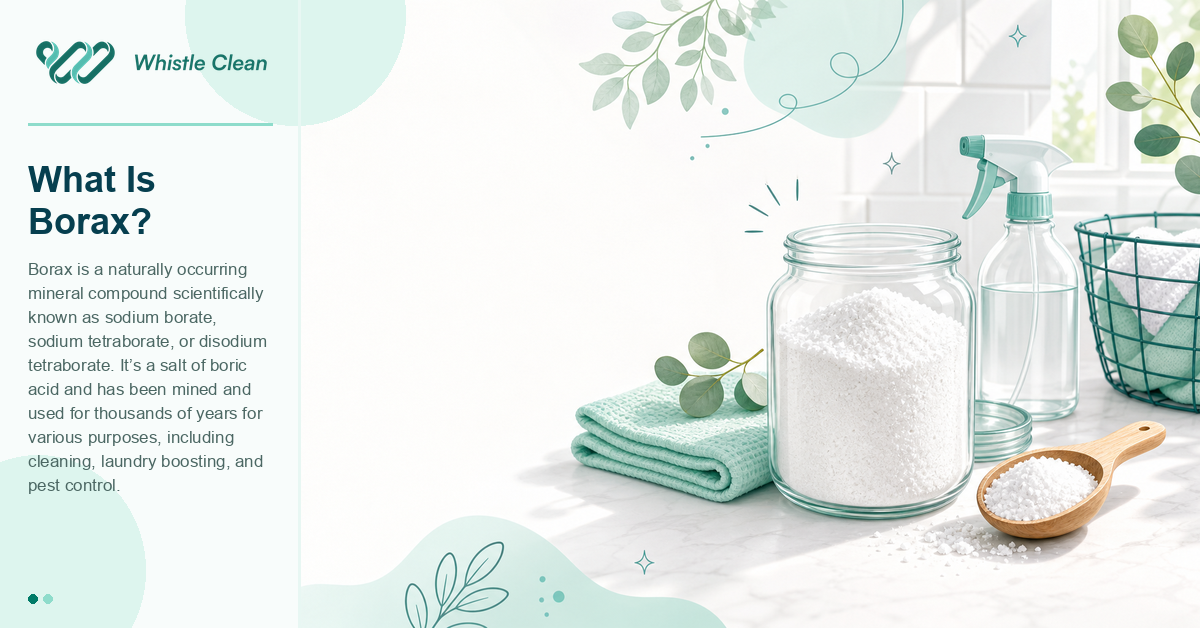
Borax is a naturally occurring mineral compound scientifically known as sodium borate, sodium tetraborate, or disodium tetraborate. It’s a salt of boric acid and has been mined and used for thousands of years for various purposes, including cleaning, laundry boosting, and pest control.
Where does Borax come from?
Borax is mined from dried salt lake beds in areas with high evaporation rates. The largest deposits in the United States are found in California’s Mojave Desert, particularly in Boron, California. Turkey also has significant borax deposits. The mineral forms when seasonal lakes evaporate, leaving behind concentrated mineral deposits that are then refined for commercial use.
What does Borax look like and how is Borax generally used?
Borax appears as a white, odorless crystalline powder that resembles table salt or powdered sugar. The crystals are soft and dissolve easily in water, creating an alkaline solution.
Common household uses include:
- Laundry booster and stain remover
- Multi-purpose household cleaner
- Deodorizer for carpets and trash cans
- Mold and mildew remover
- Toilet bowl cleaner
- Pest control aid
Other Names for Borax
What are Borax’s other names or chemical terms?
Understanding borax’s various names helps you identify it correctly and avoid confusion with similar products:
Chemical names:
- Sodium borate
- Sodium tetraborate
- Disodium tetraborate
- Sodium tetraborate decahydrate (Na₂B₄O₇·10H₂O)
Common brand names:
- 20 Mule Team Borax (the most widely recognized brand)
- Borax powder
- Borax crystals
Important distinction: Borax is NOT the same as boric acid, though they’re related compounds. Boric acid is more acidic and used primarily for pest control, while borax is more alkaline and better suited for cleaning.
Are there different grades, forms, or strengths of Borax?
Borax comes in several grades:
Consumer/household grade (99% pure) is what you’ll find in grocery stores and is safe for home cleaning and laundry use.
Technical grade (95-98% pure) is used for industrial applications and may contain more impurities.
Agricultural grade is used as a micronutrient supplement for crops.
For home cleaning purposes, standard household-grade borax (like 20 Mule Team) is all you need. The form remains consistent-a fine white powder-though some suppliers may offer different crystal sizes.
Cleaning Uses
How is Borax used in home cleaning?
Borax’s versatility makes it valuable throughout your home:
Laundry applications:
- Add ½ cup to wash loads to boost detergent effectiveness
- Pre-treat stains by making a paste with water
- Whiten whites and brighten colors
- Remove odors from clothes and linens
Kitchen cleaning:
- Scrub sinks and countertops
- Clean and deodorize garbage disposals
- Remove stains from cookware
- Clean refrigerator interiors
Bathroom cleaning:
- Scrub tubs, showers, and tile
- Clean and deodorize toilets
- Remove soap scum and hard water deposits
- Eliminate mold and mildew
General household:
- Deodorize carpets (sprinkle, wait, vacuum)
- Clean outdoor furniture
- Remove crayon and marker from walls
- Freshen trash cans
What are the best surfaces or areas to clean with Borax?
Borax works exceptionally well on:
Ideal surfaces:
- Porcelain (sinks, tubs, toilets)
- Ceramic tile and grout
- Stainless steel
- Fiberglass
- Laminate countertops
- Vinyl flooring
- Glass
- Painted walls
- Most fabrics (test first)
Cleaning scenarios where borax excels:
- Hard water stain removal
- Grease cutting
- Mold and mildew removal
- Odor elimination
- Rust stain removal
- Soap scum removal
Can Borax be mixed safely with other cleaning ingredients?
Yes, but with important limitations. Borax pairs well with many natural cleaning ingredients:
Safe combinations:
- Borax + dish soap: Creates an effective all-purpose cleaner
- Borax + washing soda: Powerful laundry booster
- Borax + lemon juice: Good for scrubbing and deodorizing
- Borax + castile soap: Gentle multi-surface cleaner
- Borax + essential oils: Adds pleasant scent to cleaning solutions
Effective recipe ratios:
- All-purpose spray: 2 tablespoons borax + 2 cups hot water + ½ teaspoon dish soap
- Scrubbing paste: ½ cup borax + enough water to form paste
- Carpet deodorizer: 2 cups borax + 20 drops essential oil
Important safety note: While some sources suggest mixing borax with vinegar, this combination is less effective because vinegar’s acidity neutralizes borax’s alkalinity, reducing both ingredients’ cleaning power. Use them separately for best results.
Safety and Storage
What should you do or avoid when using Borax?
Safety precautions:
DO:
- Wear gloves if you have sensitive skin
- Ensure good ventilation when using in enclosed spaces
- Keep out of reach of children and pets
- Rinse surfaces thoroughly after cleaning
- Test on inconspicuous areas first
- Follow package directions for quantities
- Dissolve completely in water before use
AVOID:
- Ingesting borax (it’s toxic when swallowed)
- Getting borax in eyes
- Inhaling large amounts of dust
- Using on food preparation surfaces without thorough rinsing
- Leaving borax solutions where children or pets can access them
For sensitive individuals:
If you have respiratory issues or very sensitive skin, consider wearing a dust mask when pouring borax powder and always use gloves during cleaning.
Which cleaning mixtures or surfaces are unsafe?
Unsafe mixtures:
- Never mix borax with chlorine bleach in concentrated forms, as this can create irritating fumes
- Avoid mixing with acids (vinegar, lemon juice in solutions) as this reduces effectiveness
- Don’t combine with ammonia-based cleaners as this may create irritating vapors
Surfaces to avoid:
Natural stone: Marble, granite, and limestone can be etched by borax’s alkalinity over time. Use pH-neutral cleaners instead.
Unsealed wood: Borax can dry out and damage wood finishes. Stick to wood-specific cleaners.
Aluminum: Extended contact with borax solutions may cause discoloration or pitting.
Waxed surfaces: Borax can strip wax finishes from floors and furniture.
Delicate fabrics: Silk, wool, and some synthetic fabrics may be damaged. Always test first.
How should Borax be stored for freshness and safety?
Proper storage ensures borax remains effective and safe:
Storage best practices:
- Keep in original container with lid tightly sealed
- Store in a cool, dry place away from humidity
- Keep in a locked cabinet away from children and pets
- Store separately from food items
- Avoid extreme temperature fluctuations
- Keep away from acids and metals
Shelf life: When stored properly, borax has an indefinite shelf life. The mineral compound doesn’t degrade over time, though it may clump if exposed to moisture. If clumping occurs, simply break up the chunks-the borax remains fully effective.
Container tips: If you transfer borax to another container, use a clearly labeled, airtight plastic or glass container. Never use food containers that might be confused for something edible.
Why Borax Works
Why does Borax clean so well?
Borax’s cleaning effectiveness comes from multiple mechanisms working together:
Alkalinity: When dissolved in water, borax creates a pH of about 9.5 (alkaline). This alkalinity helps break down acidic stains, grease, and organic matter that tend to be acidic in nature.
Water softening: Borax binds to minerals in hard water (calcium and magnesium), preventing them from interfering with soap and detergent effectiveness. This is why it works so well as a laundry booster.
Emulsification: Borax helps break down oils and greases into smaller droplets that can be washed away more easily.
Buffering action: It helps maintain stable pH levels in cleaning solutions, making other cleaning agents work more consistently.
What chemical reaction or property makes Borax effective?
The science behind borax’s cleaning power involves several chemical properties:
Borate ions: When borax dissolves in water, it releases borate ions (B₄O₇²⁻) which react with water molecules to form hydroxide ions (OH⁻). These hydroxide ions create the alkaline environment that breaks down greasy, oily stains.
Chelation: Borax acts as a chelating agent, meaning its molecules bind to metal ions (like those in hard water) and prevent them from forming deposits or interfering with cleaning.
Enzyme activation: In laundry detergents, borax helps activate enzymes that break down protein-based stains like blood, grass, and food.
Disinfecting properties: While not a registered disinfectant, borax does inhibit the growth of some bacteria, molds, and fungi due to its alkaline nature and ability to disrupt cell membranes.
Anti-caking effect: Borax prevents other cleaning ingredients from clumping together, which is why it’s often included in powdered cleaner formulations.
DIY Cleaning Recipes
What easy homemade cleaner recipes use Borax?
Here are proven, effective recipes for various cleaning needs:
All-Purpose Spray Cleaner
- 2 tablespoons borax
- 2 cups hot water
- ½ teaspoon liquid dish soap
- 10 drops essential oil (optional)
Mix borax in hot water until dissolved, add soap, pour into spray bottle. Shake before each use. Great for counters, appliances, and bathroom surfaces.
Heavy-Duty Scrubbing Paste
- ½ cup borax
- ½ cup baking soda
- Water (add gradually)
Mix dry ingredients, add water until you achieve toothpaste consistency. Excellent for tubs, sinks, and tough stains.
Toilet Bowl Cleaner
- ½ cup borax
- 10 drops tea tree or lemon essential oil
Sprinkle borax around bowl, add essential oil, let sit 30 minutes, scrub and flush.
Carpet Deodorizer
- 2 cups borax
- ½ cup baking soda
- 20 drops essential oil
Mix well, sprinkle on carpet, wait 30 minutes, vacuum thoroughly.
Laundry Stain Remover Paste
- ¼ cup borax
- ¼ cup washing soda
- Water to form paste
Apply to stains, let sit 30 minutes before washing.
Mold and Mildew Spray
- ½ cup borax
- 2 cups hot water
- ¼ cup white vinegar (added separately)
Dissolve borax in water, spray on moldy areas, let sit 10 minutes, spray with vinegar, scrub and rinse.
What are the best ingredient combinations for Borax?
Synergistic pairings:
Borax + Washing Soda: This powerful duo creates an exceptional laundry booster and heavy-duty cleaner. Both are alkaline and work together to tackle tough stains and odors.
- Ratio: Equal parts for laundry (½ cup each per load)
Borax + Baking Soda: Combines borax’s alkalinity with baking soda’s gentle abrasiveness. Perfect for scrubbing without scratching.
- Ratio: 1:1 for scrubbing paste
Borax + Castile Soap: Creates a gentle yet effective all-purpose cleaner suitable for most surfaces.
- Ratio: 2 tablespoons borax + 1 tablespoon castile soap per 2 cups water
Borax + Dish Soap: The degreasing power of dish soap enhanced by borax’s alkalinity makes this ideal for kitchen cleaning.
- Ratio: 2 tablespoons borax + ½ teaspoon dish soap per 2 cups water
Borax + Essential Oils: Tea tree, lavender, lemon, and eucalyptus oils add antimicrobial properties and pleasant scents.
- Ratio: 10-20 drops per cup of borax
Borax + Hydrogen Peroxide: When used separately in sequence (not mixed together in storage), this combination tackles tough stains and mold.
- Method: Apply borax solution, rinse, then apply hydrogen peroxide
Common Problems and Solutions
What common problems can occur when cleaning with Borax?
White residue or film:
This is the most common complaint when using borax. It occurs when borax doesn’t dissolve completely or too much is used.
Skin irritation:
Some people experience dryness or mild irritation from direct contact with borax solutions.
Reduced effectiveness:
Borax may seem to stop working well, often due to water temperature or mixing issues.
Clumping in storage:
Moisture exposure causes borax to form hard clumps in the container.
Fabric stiffness:
Overuse in laundry can make fabrics feel stiff or rough.
Streaking on surfaces:
Glass and shiny surfaces may show streaks after cleaning with borax.
How can these issues be prevented or solved?
Preventing white residue:
- Always dissolve borax completely in hot water before use
- Use recommended amounts (more isn’t better)
- Rinse surfaces thoroughly after cleaning
- For laundry, add borax to water before adding clothes
- If residue appears, wipe with plain water or vinegar solution
Avoiding skin irritation:
- Wear rubber gloves when handling borax solutions
- Rinse hands thoroughly if contact occurs
- Reduce concentration if irritation persists
- Consider alternatives if you have very sensitive skin
Ensuring effectiveness:
- Use hot water to dissolve borax (it dissolves poorly in cold water)
- Don’t mix with acids (vinegar, lemon juice) in the same solution
- Check expiration dates on other ingredients mixed with borax
- Shake spray bottles before each use to redistribute settled borax
Preventing clumping:
- Store in airtight containers
- Keep in cool, dry locations
- If clumping occurs, break up chunks with a spoon (it’s still effective)
- Consider storing with a food-safe desiccant packet
Preventing fabric stiffness:
- Use only ½ cup per large laundry load
- Add white vinegar (½ cup) to rinse cycle to soften fabrics
- Ensure complete dissolution before adding clothes
Avoiding streaks:
- Use less borax in cleaning solutions
- Buff surfaces dry with a microfiber cloth
- Rinse glass surfaces with plain water after cleaning
- Polish with newspaper or coffee filters for streak-free shine
Environmental and Health Considerations
Is Borax safe for health and the environment?
The safety of borax is a topic of ongoing discussion. Here’s what you need to know:
Health considerations:
Low acute toxicity: Borax has low toxicity for humans when used as directed for cleaning. It’s less toxic than many conventional cleaning products.
Ingestion risks: Borax should never be ingested. Swallowing large amounts can cause nausea, vomiting, and other serious symptoms. This is why it must be kept away from children and pets.
Skin and eye irritation: Borax is mildly irritating to skin and eyes. It’s not corrosive but can cause discomfort with prolonged contact.
Respiratory concerns: Inhaling borax dust may irritate respiratory passages. This is generally only a concern with heavy, prolonged exposure.
Reproductive health: The European Union has classified borax as a substance of concern for reproductive health at high exposure levels. However, the exposure levels from typical household cleaning use are far below concerning thresholds.
Comparison to alternatives: Borax is generally considered safer than many conventional cleaners containing bleach, ammonia, or harsh synthetic chemicals.
Environmental impact:
Biodegradability: Borax is a naturally occurring mineral that doesn’t break down but also doesn’t accumulate dangerously in the environment in small quantities.
Water systems: Boron (from borax) is a plant micronutrient in small amounts but can be harmful to aquatic plants in high concentrations. Normal household use doesn’t typically create environmental concerns.
Mining impact: Like all mined minerals, borax extraction has environmental impacts, but it’s less intensive than petroleum-based cleaning product manufacturing.
Septic systems: Borax is generally safe for septic systems in normal household quantities, though excessive use may affect bacterial balance.
Eco-friendly status: Many consider borax a “green” cleaning option because it’s natural, multipurpose (reducing product consumption), and free from synthetic fragrances and harsh chemicals.
Bottom line: When used as directed for cleaning purposes, borax is safe for most people and has minimal environmental impact. Practice common-sense precautions: wear gloves, keep away from children and pets, avoid ingestion, and use recommended amounts.
Borax FAQs
Can Borax be mixed with vinegar or hydrogen peroxide?
Borax and vinegar:
It’s better to use these separately rather than mixed together. Here’s why:
- Vinegar is acidic (pH ~2.5) while borax is alkaline (pH ~9.5)
- When combined, they neutralize each other, reducing both ingredients’ effectiveness
- The chemical reaction produces boric acid and sodium acetate, which are less effective cleaners
Better approach: Use borax for alkaline cleaning tasks (grease, protein stains) and vinegar for acidic cleaning tasks (mineral deposits, soap scum) at different times or on different surfaces.
Sequential use: You can use them in sequence-clean with borax solution, rinse, then spray with vinegar-to get benefits of both.
Borax and hydrogen peroxide:
These can be used together more effectively than borax and vinegar:
- Both are alkaline, so they don’t neutralize each other
- Hydrogen peroxide adds oxidizing/bleaching power to borax’s cleaning action
- This combination is particularly effective on mold, mildew, and tough stains
Safe mixing method:
- Dissolve borax in hot water first
- Allow solution to cool to warm
- Add hydrogen peroxide (heat can degrade peroxide)
- Use immediately (don’t store this mixture)
Example recipe: 2 tablespoons borax + 2 cups hot water (cooled) + ½ cup 3% hydrogen peroxide for mold removal.
Is Borax safe for marble, stone, or wood surfaces?
Marble and natural stone:
No, avoid using borax on marble, granite, limestone, travertine, and other natural stone.
- Borax’s alkalinity (pH 9.5) can etch and dull marble and limestone
- It may cause discoloration on granite over time
- Stone sealants can be degraded by repeated borax exposure
- Even diluted solutions pose risks with regular use
Safe alternative: Use pH-neutral stone cleaners specifically formulated for natural stone.
Wood surfaces:
Unsealed wood: Not recommended. Borax solutions can:
- Raise wood grain
- Cause water staining
- Dry out wood fibers
- Damage or remove finishes
Sealed wood: Use with extreme caution:
- Very dilute solutions (1 tablespoon per quart water) may be used occasionally
- Wipe dry immediately-never let solution sit
- Test in inconspicuous area first
- Not recommended for regular use
Painted wood: Generally safe for painted wood surfaces when:
- Solution is properly diluted
- Surface is wiped dry after cleaning
- Paint is in good condition (not peeling or cracked)
Best practice: For wood surfaces, stick to wood-specific cleaners or simple soap and water solutions.
Engineered stone (quartz): Generally safe for quartz countertops as they’re non-porous and highly resistant to alkaline cleaners. Still, rinse thoroughly after use.
Does Borax clean, disinfect, or both?
Borax is primarily a cleaner, not a disinfectant. Understanding the difference is important:
What borax DOES:
Cleaning: Borax excels at:
- Removing dirt, grease, and grime
- Eliminating odors
- Breaking down organic matter
- Lifting stains
- Softening water
Antimicrobial properties: Borax does have some ability to:
- Inhibit mold and mildew growth
- Slow bacterial reproduction
- Create an inhospitable environment for some microorganisms
- These effects come from its alkalinity and ability to disrupt cell functions
What borax DOESN’T do:
Disinfection: Borax is NOT:
- EPA-registered as a disinfectant
- Proven to kill 99.9% of bacteria and viruses
- Effective against all pathogens
- A substitute for true disinfectants when disinfection is needed
When to use borax:
- Regular household cleaning
- Deodorizing
- Laundry boosting
- Mold prevention (not killing active mold)
- General maintenance cleaning
When you need actual disinfection:
- After handling raw meat
- During illness outbreaks
- Bathroom surfaces that need sanitizing
- High-touch surfaces during cold/flu season
For these situations, use:
- EPA-registered disinfectants
- Bleach solutions (properly diluted)
- Hydrogen peroxide (3% or higher)
- Alcohol-based cleaners (70% isopropyl alcohol)
Bottom line: Borax is an excellent cleaner that offers some antimicrobial benefits, making it great for routine cleaning and prevention. However, when true disinfection is necessary-especially for health and safety reasons-use a product specifically designed and tested for that purpose.
Conclusion
Borax remains a versatile, affordable, and effective cleaning agent for modern households. Its natural origin, multiple applications, and compatibility with other eco-friendly ingredients make it a valuable addition to your cleaning arsenal. By understanding how to use borax properly-including its limitations and safety considerations-you can harness its cleaning power while protecting your family, pets, and home surfaces.
Whether you’re tackling tough laundry stains, scrubbing bathroom tile, or creating custom DIY cleaners, borax offers proven results backed by over a century of household use. Remember to always follow safety guidelines, test on inconspicuous areas first, and choose the right tool for each cleaning job.
With the knowledge from this guide, you’re now equipped to use borax confidently and effectively throughout your home.